
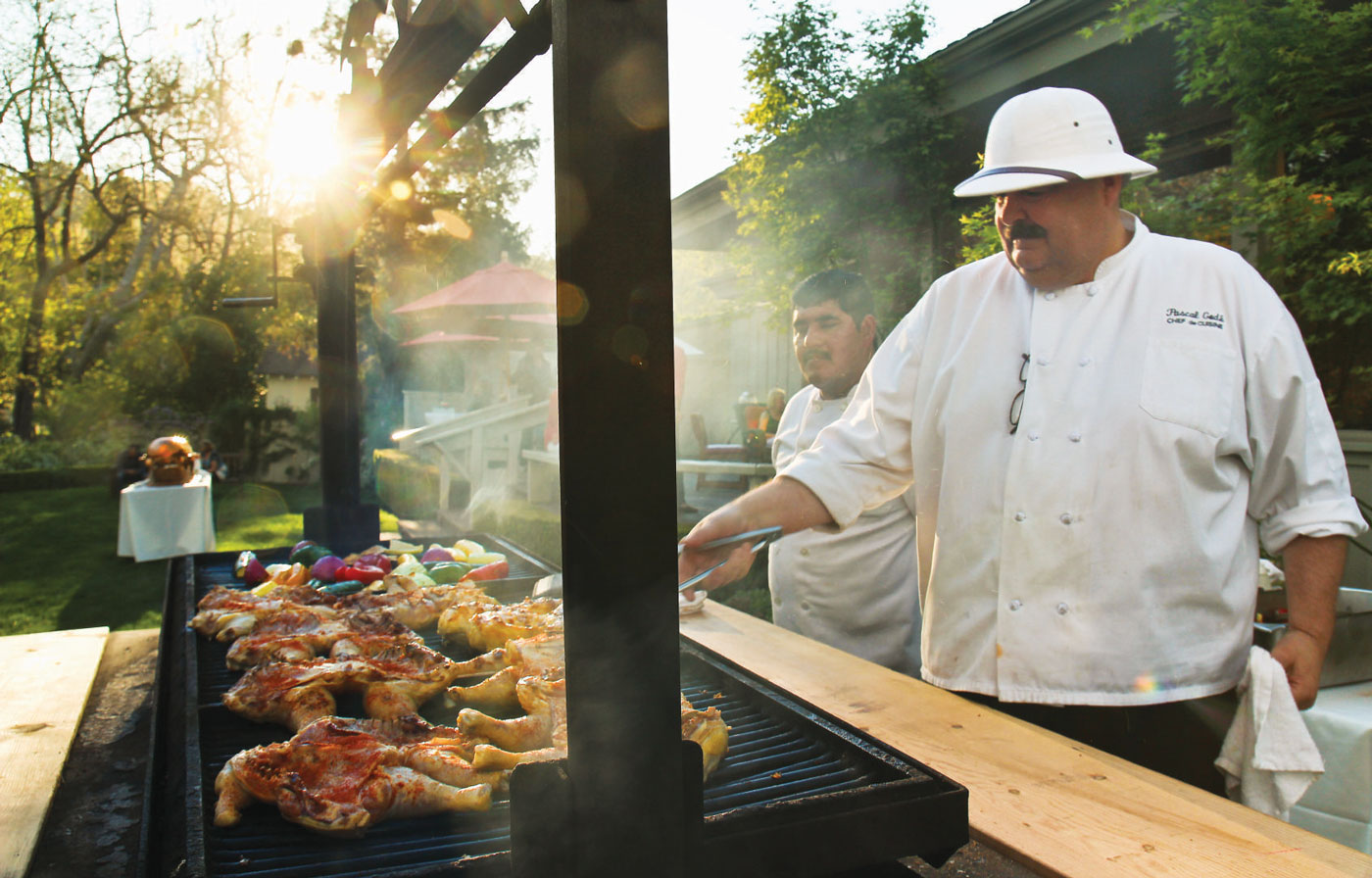
That’s right — barbecue boot camp is in. Why? Because, as it turns out, mindlessly lighting up the propane grill and turning ’n’ burning for seven to 12 minutes with a can of Pabst Blue Ribbon in hand and Lynyrd Skynyrd blasting in the background isn’t the apex of achievement with respect to this primal American activity. Not even close.
“The art and craft of barbecuing is a tradition that needs to be honed, perfected, and passed on,” says grill master, winemaker, and restaurateur Frank Ostini. Owner of the Hitching Post II, a Buellton, California-based landmark known for its steaks and a cameo in the movie Sideways, Ostini is also cohost of the latest barbecue boot camp on the culinary map — at the Alisal Guest Ranch and Resort in the heart of Central California’s wine country.
check out our premium collection
“When I say barbecuing,” Ostini clarifies to a crowd of attentive, and hungry, resort guests, “I’m talking about Santa Maria-style barbecuing, which is our local term for open wood-fire cooking. It’s nothing like the kind of barbecue they’re doing down in Texas with all the sauces and stuff. That’s a whole different animal, and I’m sure there’s a good boot camp for that, too.”
The Midnight Troubadour
Tough and timeless, this polo is built for the long ride. Featuring a crisp, non-collapsing collar and a rugged, stretchy fabric, it's the perfect shirt for any cowboy's wardrobe.
There is. But during this three-night, four-day program at the Alisal — a hallowed 1940s-era dude ranch turned premier family-friendly retreat — there will be no mention of tangy sauce. It’s all about Santa Maria-style.
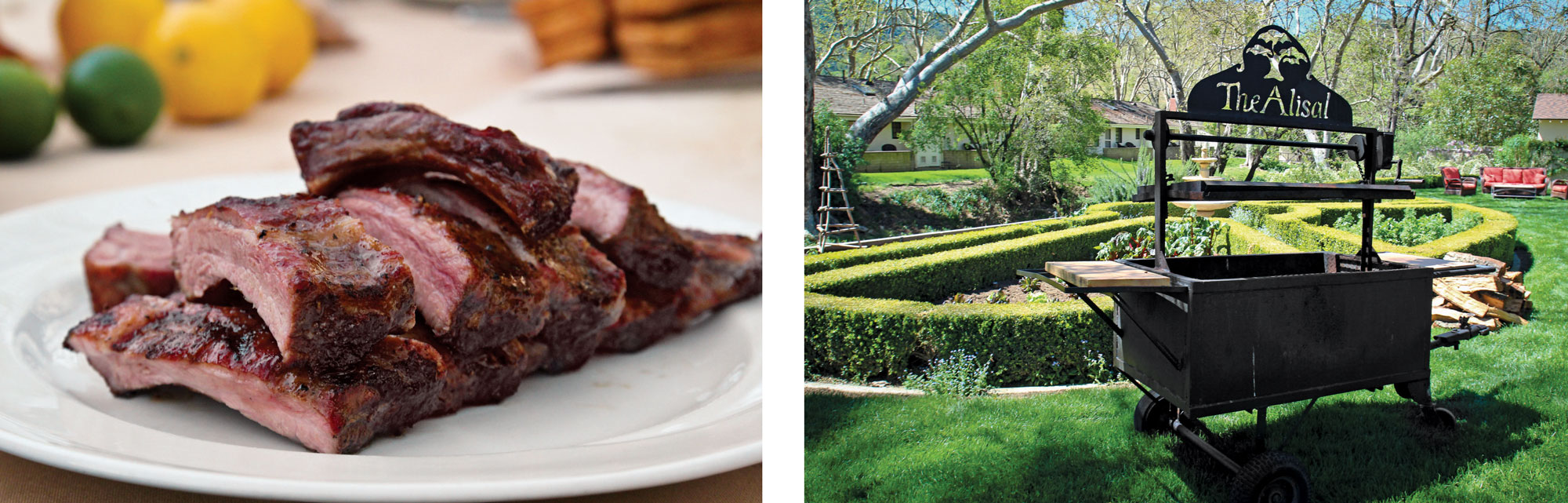
Named after the Central California region where it was popularized, the Santa Maria-style barbecuing method (its name is actually trademarked by the local chamber of commerce) has roots in the cooking styles of both the area’s native Chumash Indians and its 19th-century Spanish settlers. The standard fuel: hot coals from indigenous coastal red oak. The special seasoning: An elemental blend of salt, pepper, and granulated garlic salt. The apparatus: An adjustable ironwork grill introduced to California by Europeans in the 1800s and now sold at many home-supply stores up and down the coast.
And most importantly, the preferred cut of meat: top sirloin or, for the Santa Maria purist, tri-tip — the triangular-shaped bottom sirloin cut — which is generously coated with the seasoning mixture and cooked over a hot oak fire. Standard sides include tossed green salad, thick slices of French bread dipped in melted butter, homemade salsa, and the sine qua non — pinquito beans, a pinkish-white staple grown in the Santa Maria Valley for generations. The one other essential ingredient? An appetite. Oh, and good wine.
“Santa Maria-style is about simplicity,” adds Pascal Godé, the resort’s executive chef and event cohost. “It’s about creating a delicate balance of flavors for the beef or the chicken or the fish without overpowering it, or ... ” Godé looks away like he’s about to utter an unspeakable word, “overcooking it. The worst and most common thing with grilling is overcooking.”
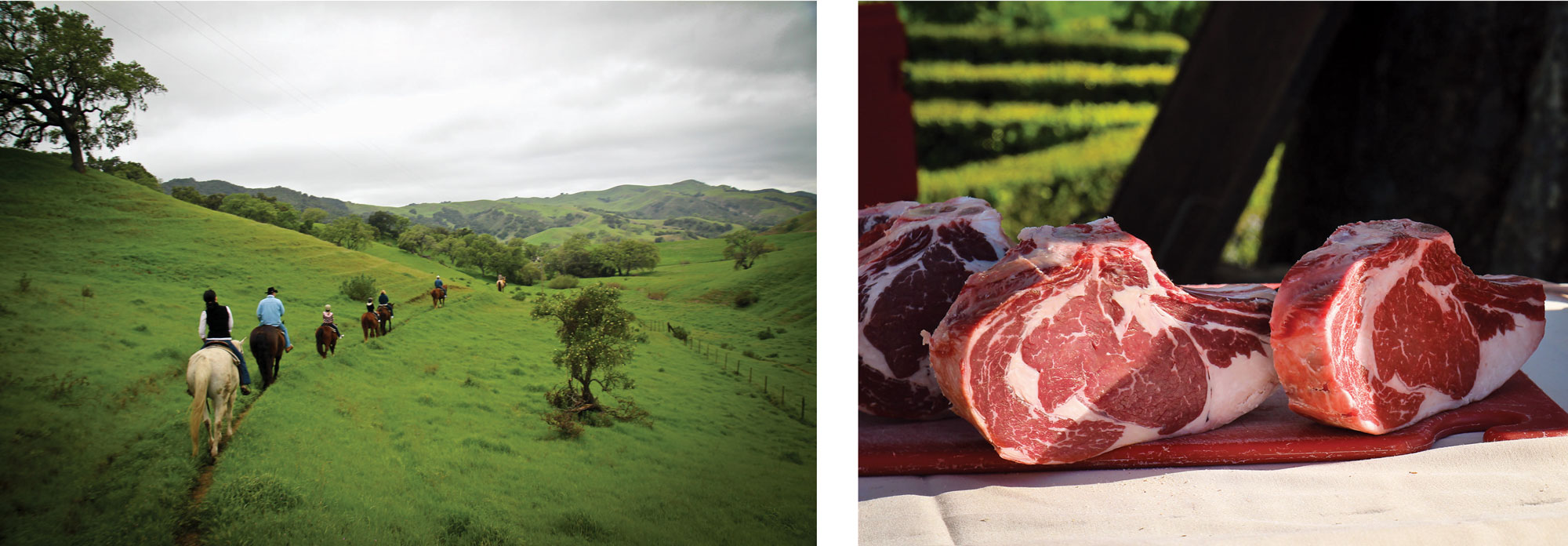
Tucked in the oak-sprinkled coastal foothills north of Santa Barbara on the edge of the famed Santa Ynez Valley, the Alisal’s bucolic grounds seem perfectly tailored for informal classes about the finer points of regional California grilling techniques, followed by leisurely afternoons on the golf course, tennis court, spa table, 100-acre spring-fed lake, or, farther afield, along miles of pastoral riding trails that wind past a stable full of quarter horses and fields of roaming cattle and deer. There may be plenty of opportunities to relax, but in the BBQ classroom, the students are rapt.
During the first morning grilling lecture, the two seasoned chefs are peppered with questions: What’s the best wood to use? How do you season tri-tip? Can you replicate a wood fire on a gas grill? What’s the proper way to cut your meat? What’s the best basting brush? Is it wise to marinate fish prior to grilling it? Can you put lamb on the barbecue? Is grass-fed beef harder to grill?
Clearly, Santa Maria-style barbecue is a hot topic in these parts, and every response reinforces an overriding theme: simplicity.
“How do you know when the fire is hot enough?” asks one attendant.
“At my restaurant, we do the hand test,” says Ostini. “Hold your hand, palm down, about five inches over the fire. If you can only hold it there for less than three seconds, the fire is hot. Over six seconds, it’s low.”
Another indicator, he adds, is the hair on your forearms.

“Make sure your arm reaches just half the length of the grill, so you don’t singe all of it off,” Ostini quips. Next, he reviews essential tools for any grilling craftsman worth his garlic salt: stainless steel tongs (“I don’t like forks as much because they puncture the meat”); a basting mop (“Nothing fancy — you can even use a regular non-nylon paintbrush, but try to find China bristle”); a good wire brush and perforated pan; a “Santa Maria-style” ironwork wood grill, which has an open design and an adjustable grate that can be raised or lowered with a hand crank or wheel (“You can get them at Costco these days”); and for the griller, a nice glass of locally made wine.
“Falling in love with wine made me fall in love with grilling,” says Ostini as his students sip Hartley Ostini varietals and nosh on grilled artich
Source: https://www.cowboysindians.com/2012/04/barbecue-boot-camp/