
Go where the cattle and cowboys went, browse art and artifacts, play an old cowboy tune, watch a couple of oaters, or just eat a darned good steak. There are plenty of ways to celebrate the 150th anniversary of the Chisholm Trail.
“Hell’s Half Acre” — Fort Worth, Texas
At 12th and Houston in Fort Worth, you’ll find a Texas State Historical Marker that tells the story of a very different side of this cultured town.
check out our premium collection
“A notorious red light district known as Hell's Half Acre developed in this section of Fort Worth after the arrival of the Texas and Pacific Railway in 1876 launched a local economic boom. Fort Worth was soon the favorite destination for hundreds of cowboys, buffalo hunters, railroad workers, and freighters eager to wash off the trail dust and enjoy themselves. To meet the demand, a large number of saloons, dance halls, gambling houses, and bordellos opened between the Courthouse Square and the railroad depot. Illegal activities in Hell's Half Acre were tolerated by city officials because of their importance to the town's economy. The district prospered in the 1880s and added to Fort Worth's growing reputation as a rowdy frontier town. Famous gamblers Luke Short, Bat Masterson and Wyatt Earp and outlaws Sam Bass, Eugene Bunch, Butch Cassidy and the Sundance Kid are known to have spent time in Hell's Half Acre. A 1906 newspaper headline calling the district Fort Worth's den of sin and refuge of criminals was representative of periodic efforts to clean up the district. These efforts proved unsuccessful until Army officials at Camp Bowie, established here during World War I, helped local officials shut the district down. (1993)”
The Midnight Troubadour
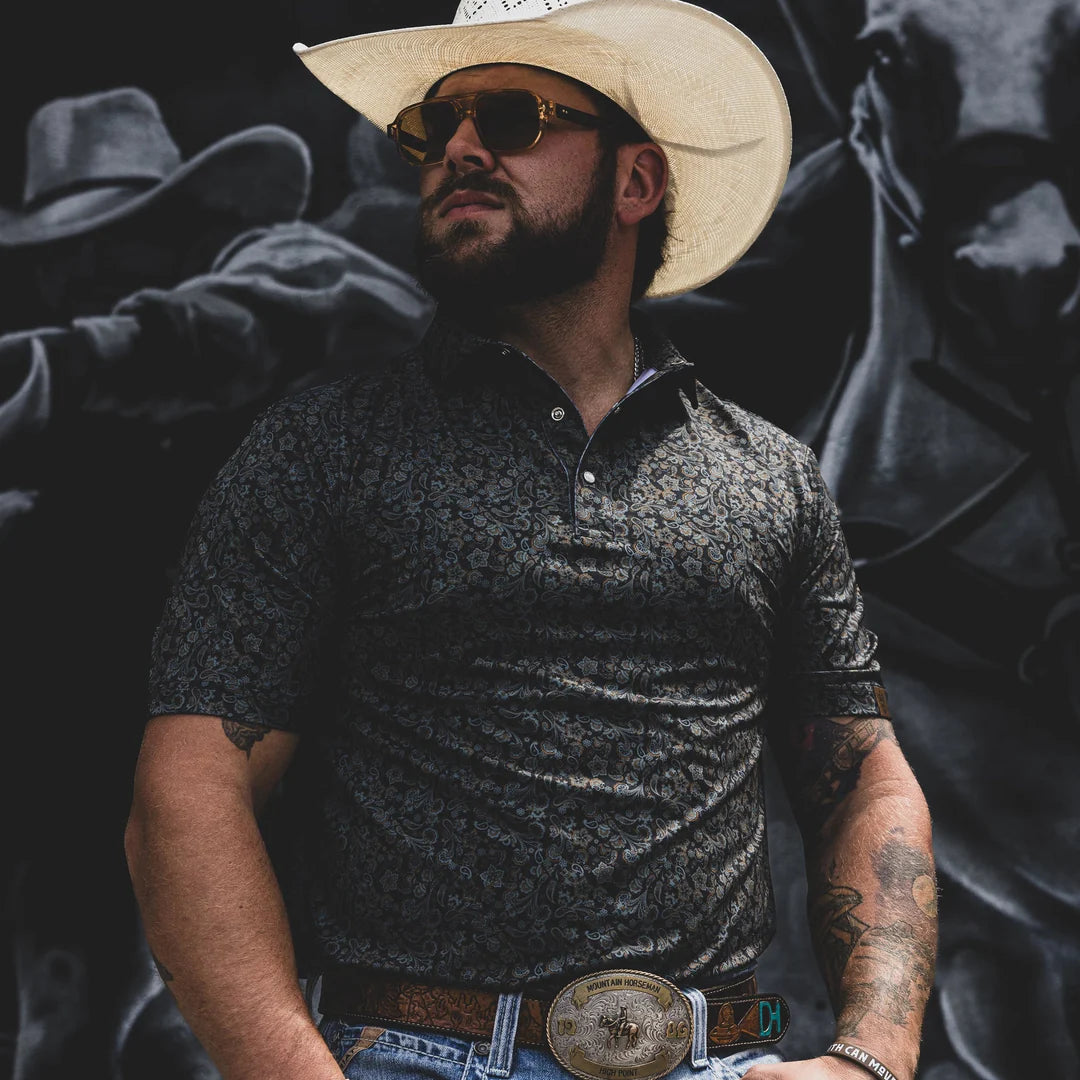
Tough and timeless, this polo is built for the long ride. Featuring a crisp, non-collapsing collar and a rugged, stretchy fabric, it's the perfect shirt for any cowboy's wardrobe.
Chisholm Trail Mural in Sundance Square Plaza — Fort Worth, Texas
Some blocks away from Hell’s Half Acre in Sundance Square Plaza — at 400 Main St. — you’ll find one of Fort Worth’s most compelling attractions: the Chisholm Trail Mural. Richard Haas’ 1988 homage to Cowtown’s historic cattle drives of the 19th century, the mural is three stories high. Standing before it, you might get the odd feeling from its tromp l’oeil perspective that you’re right there in the thick of the late 1800s, hooves stomping and dust rising.
The Herd — Fort Worth Stockyards, Fort Worth, Texas
You won’t see cowboys riding into town shooting their pistols in the air and heading for all kinds of bad-boy behavior in Hell’s Half Acre the way they did in the days of the cattle drives on the Chisholm Trail, but if you hit the Stockyards National Historic District, you can get a sense of that history during the twice-daily cattle drive. At 11:30 a.m. and 4 pm. real Texas cowhands drive a herd of Texas Longhorns down the cobblestones of Exchange Avenue. City sources say that every detail of the cattle drive — from the saddles and chaps to the boots and hats — is authentic and historically true.
Hide & Horn Exhibition at the Sid Richardson Museum — Fort Worth, Texas
To celebrate the 150th anniversary of the Chisholm Trail, the Sid Richardson Museum in Fort Worth, Texas, has mounted the cattle trail-era exhibition Hide & Horn. Shown concurrently with Legacy — featuring dynamic paintings of the 19th-century American West by Frederic Remington, Charles M. Russell, and their contemporaries, along with three bronzes by Remington and Russell — the “focus” exhibition includes rarely seen items from the museum’s permanent collection and on loan from the Rees-Jones Collection and another private collection. On view through May 28, 2017. See both exhibitions online.
Eat Some Beef
Cap off your day in Fort Worth with a meal revolving around the beef that inspired the cattle drive era. Celebrate steak at one of the city’s famous houses, including Del Frisco’s Double Eagle Steak House, Bob’s Steak & Chop House, and Ruth’s Chris Steak.
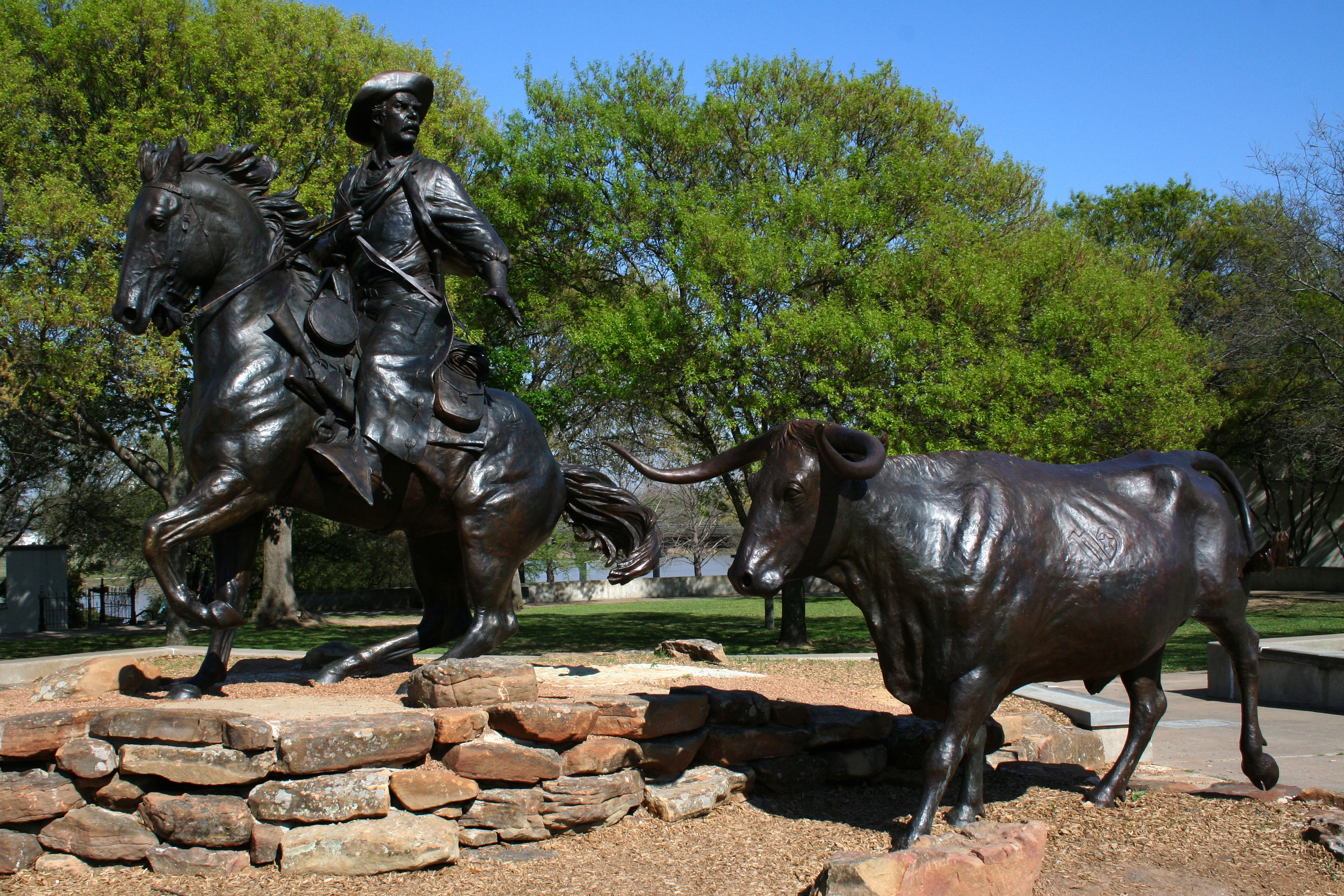
Branding the Brazos Sculpture Walk, Indian Spring Park — Waco, Texas
You might not know it from the droves of tourists seeking out the Silo District on the Fixer Upper Magnolia Trail these days, but during the Chisholm Tail era, the main traffic through Waco, Texas, was cattle. In that day, there were 800 miles of river flowing through Central Texas but no real bridges to cross the Brazos. Cattle drivers on the Chisholm Trail looking for shallow fording areas found a good spot at Waco. The trade and traffic from the trail soon made it clear that Waco could really benefit from a bridge, and the town got it done. The Waco Suspension Bridge collected its first toll on January 1, 1870. At 475 feet, it was the first major suspension bridge in the state and the only bridge to cross the Brazos at the time. The longest suspension bridge west of the Mississippi back in the day, it was wide enough for stagecoaches to pass each other or for cattle (at a toll of 5 cents a head) to cross on one side, and humans to cross on the other.
Today, that cattle-drive era is remembered with the Branding the Brazos statue series. Located on the west side of the Brazos River, Indian Springs Park is home to both the historic suspension bridge and the ambitious sculpture project by Robert Summers of Glen Rose, Texas. Completed in 2014 after eight years of work, the larger-than-life sculpture series of four riders on horseback driving 25 longhorn cattle honors Waco’s place in that important piece of Chisholm Trail Lone Star lore — right on the riverbanks and in sight of the bridge where that history actually took place.
Chisholm Trail Heritage Museum — Cuero, Texas
Cuero, Texas, population under 10,000, moves way more cattle every year than it has residents. It’s been that way for a long time, seeing as the small South Texas town has reason to consider itself the terminus of the Chisholm Trail, going back to before Cuero was even incorporated in 1873. The museum there tells the story of the great cattle drives and the American cowboy and helps preserve the ranching and agricultural heritage of DeWitt County and surrounding areas in South Texas. If you do get to Cuero for a visit, don’t miss the barbecue — beef, naturally — at Smolik’s Meats & BBQ.
Chisholm Trail Outdoor Museum — Cleburne, Texas
This private historical area open to the public educates about the rich history of Wardville, the first county seat of Johnson County, and about the impact the Chisholm Trail on the historic site. The Big Bear Native American Museum explores the impact and history of Native Americans in this area as well as the nation. The museum includes Johnson County’s original courthouse, a blacksmith shop, a stagecoach station, tepees, and other attractions.
Chisholm Trail Heritage Museum & Garis Gallery of the American West — Duncan, Oklahoma
Exhi