
Televising golf is inherently difficult. Eighteen new holes every week spread out over 150ish acres, each its own veritable arena with evolving weather conditions, variable topography, and different sunlight orientation. There’s a technology element – dozens of cameras and microphones, miles of cabling, satellite trucks, elevated mini-studios spread out across the course, graphics packages – a nerve system serving up dozens of feeds into a nerve center with a lead producer calling the shots. There’s a people element – a different tournament director, charity and corporate title sponsor at each stop, all of whom require back scratching. I’d imagine the most challenging part is the competition itself. 150 players, scattered about. All said, it’s a lot to handle and I don’t pretend to be an expert or intend to be an armchair quarterback. But at this point the entire golf world is simultaneously realizing that CBS golf telecasts have devolved into unmitigated dogshit over the last two seasons.
The Midnight Troubadour
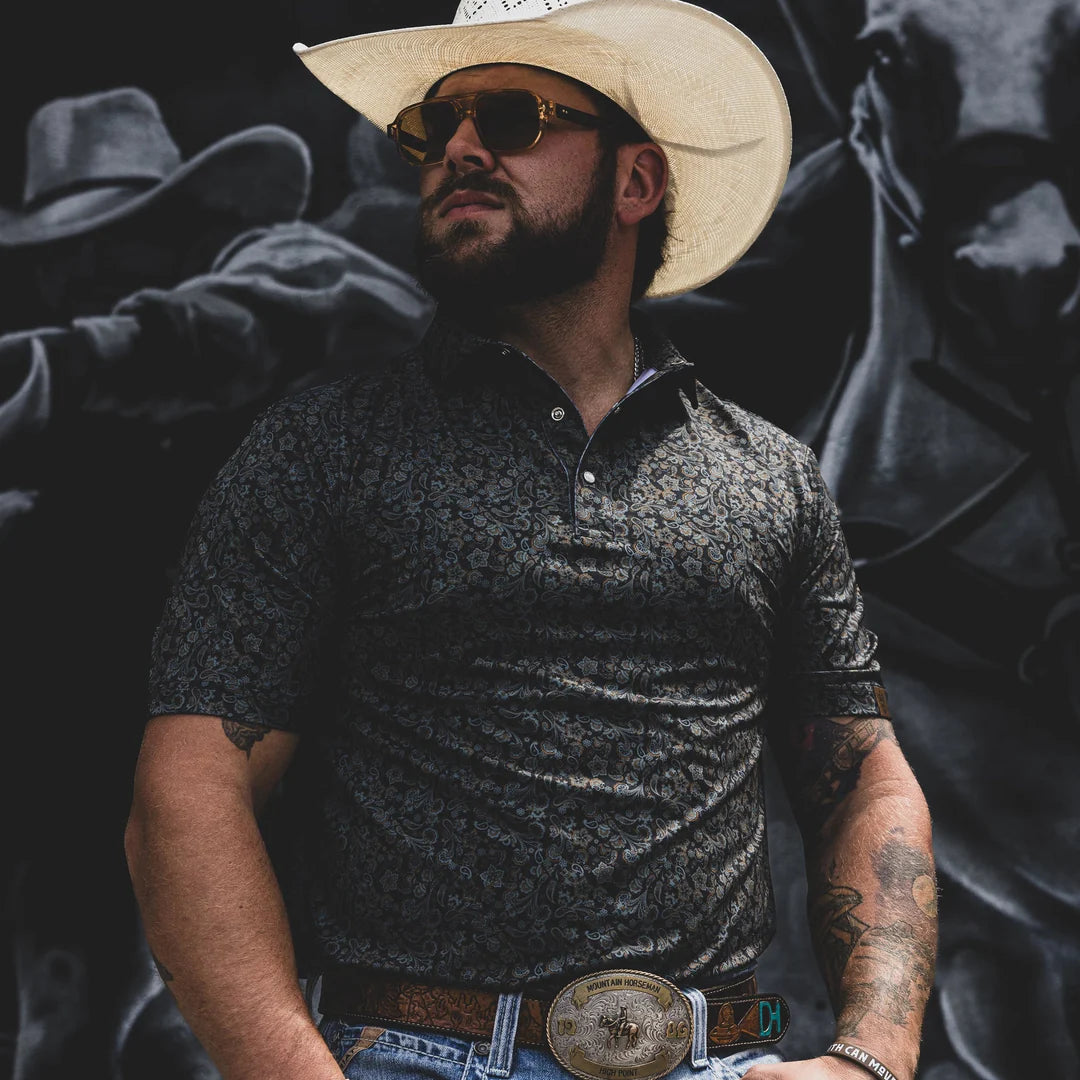
Tough and timeless, this polo is built for the long ride. Featuring a crisp, non-collapsing collar and a rugged, stretchy fabric, it's the perfect shirt for any cowboy's wardrobe.
The history of golf on CBS is probably worthy of it’s own book, but here’s a quick synopsis. In the late ‘50s and early ‘60s the PGA Tour was still a relatively nascent traveling roadshow and needed stars. Frank Chirkinian, aka “The Ayatollah,” became the executive producer for CBS’ telecasts, identifying and oftentimes creating those stars. CBS was the gatekeeper, deciding which players fans saw and what the narrative was. Meanwhile fans knew most of what they knew about professional golfers from the weekend telecasts. Chirkinian led Golf on CBS from 1959 to 1996 and by all accounts he was brilliant (his cameo in Tin Cup was insightful). The guy was a pioneer; blimp shots, microphones scattered around the course, diverse camera angles, a propensity for showing as many golf shots as possible, the blueprint for the televised masterpiece that is The Masters – that was all Chirkinian. Most importantly, he understood this: “Bob Jones once told me, ‘Frank, the more golf you show, the better your product is.” CBS had a responsibility to the game, and under Chirkininan’s leadership they lived up to the task. He retired in 1996 and longtime CBS employee Lance Barrow took the reins at the auspicious outset of the 1997 season. Barrow cut his teeth as executive producer during the halcyon days of the Big Cat Era. Tiger was the narrative, the messiah (insert hilarious Earl clip), the second most famous athlete on the planet after MJ. With ratings skyrocketing, the demographic skewing younger and younger, and Corporate America jonesing for a piece of the action, all Barrow had to do was focus on Tiger (the rest of the field be damned), keep the telecasts between the mayonnaise and the mustard, and not piss off the members at August National.
Basically, autopilot.
The warning signs began manifesting themselves a few years ago when Big Cat missed The Masters for the first time and the telecast seemed a little lost. The rest of the season suffered with Cat fighting injuries and eventually shutting it down. The issues escalated during the West Coast Swing in 2015 – with a steadfast refusal to show up-and-coming stars in the hunt (see: Koepka at Phoenix) and the Pebble Pro-Am unwatchable. Around this same time NBC’s telecasts improved, showing more live golf in stark contrast to CBS whilst mixing in oodles of ProTracer and even some decent feature pieces (Josh Elliott’s impassioned Mother’s Day monologue at The Players notwithstanding). Then the PGA Championship happened, coverage was panned, even the casual golf fan was disillusioned, and Soly nearly passed out from beating the Koepka drum so hard.
Koepka shoots 66, sits at T6. Literally 4 shots shown, and not one of them live. And they literally just called him "one to watch"!
— No Laying Up (@NoLayingUp) August 16, 2015
If you look closely in the background you can see world number 1 charging pic.twitter.com/FWTxo7isHI
— No Laying Up (@NoLayingUp) August 15, 2015
Any hope that CBS would heed some of the criticism, take a look in the mirror and make the requisite changes for the 2016 season was quickly dashed when they butchered coverage of Torrey Pines. The next week saw a respite with NBC taking over duties while CBS was busy getting crushed for crappy Super Bowl coverage. CBS took over again for the annual atrocity at Pebble Beach. That telecast is perennially the worst on the entire schedule – B-list celebs, to the 2:30-3 coverage gap hitting three of the most famous holes in the world, to the lack of actual golf shown (at several points there were more professional golf shots at Pebble shown on the PGA Tour’s twitter account than on CBS). It’s essentially a B-list celebrity orgy. This sums it up:
Here was a full segment: pic.twitter.com/Jj8W9ErR5f
— Nick WanderscheidPGA (@NWander1) February 12, 2016
Which brings us to Riviera for one of the BSD tourneys on the schedule, being played in the midst of a vitriolic Twitter mob converging on CBS. Figured this was a good opportunity to take a closer look at yesterday’s coverage of the Northern Trust Open to see if the frustration is warranted or if this is all overblown. Here’s something to consider as we dive into the 175 minute telecast: CBS presented 184 live or semi-live golf shots, between 90 and 95 commercials (depending upon your local affiliate), and a mind-numbing amount of fluff in between. I don’t pretend to know how these commercial metrics measure up with a typical NBC telecast, but the fact that we’ve never really noticed suggests that’s not an issue on the Peacock. I do know that 184 shots is not a lot, AT ALL. Also, if these issues were new I’d be inclined to give CBS a pass. But the reality is that these trends have always been present, and people haven’t wised up until now because we’ve just gotten used to it. CBS with the long con!
Some ground rules for how I tallied everything:
- I was generous, considering everything outside of 1-foot tap-in a “golf shot.”
- The slow-mo “SwingVision” stuff doesn’t count as a shot.
- Jim Nantz rattling off sponsors after commercial breaks count toward commercial time, but not commercials. Same deal with shots of the “MetLife Snoopy Two” blimp
Let’s dive in:
- 2:30pm – Golf Channel coverage ceases and the dreaded coverage gap starts. Ostensibly the thirty minute gap is to allow the production crew to switch over to the CBS graphics package. Whatever, it’s 2016. Figure it out.
- 3:00pm – CBS coverage is slated to start, but as happens every week a terrible college basketball game is running over the allotted time. At 3pm there is 2:22 left in the game and the score is 92-62. Not even a degenerate gambler would’ve been interested. We’re told that coverage is available on PGATour.com.
- 3:05pm – The basketball mercifully ends. We’re in the clear. Actually, nope. CBS runs NINE commercials and then we’re treated to a CBS Sports Desk. Thanks for the scores guys, I don’t have the internet.
- 3:10pm – After five wasted minutes, golf coverage starts, sort of. We’re treated to four and a half minutes of golf during which eight live(ish) shots are shown. By this time every group has played 10. Nantz makes sure to mention that 10 is one of the best holes on tour, and he’s right. But then they proceed to not show Bubba’s tee shot on said hole. In all, we see just four tee shots on 10.
- Next we get the typical intro montage package, then one Adam Scott putt, then Nantz does the “Hello friends” routine (he actually “Hello friends the viewers at home and then greets Faldo with a “Hello friend” – crazy double dip!). At this point we’re essentially 13 minutes deep into coverage and have witnessed nine shots, six of which were putts. Imagine tuning into any other sport and missing pivotal live action due to sponsor promos, self-serving commentary and highlights of stuff that we missed. What glorious madness! <
Source: https://nolayingup.com/blog/eye-on-cbs-an-intervention