
Native American-made fashions are in the spotlight — and on the runway — as more and more indigenous designers are making their mark. Over the last five years, there has been an explosion of couture creativity, from Olympic outerwear to network TV shows to Paris catwalks.
What do these designers have in common? “If anything is similar, it’s that they are reaching for the stars,” says Jessica Metcalfe, who started the popular Beyond Buckskin blog and boutique to spotlight Native American designers and their work, focusing on authentic, contemporary Native fashion. “I think a lot of designers started thinking bigger and that they can accomplish big things.”
check out our premium collection
Cowboys & Indians talked with five Native American designers who don’t necessarily eschew buckskin but definitely do go beyond it. From different tribes and regions, they are transforming their experiences and heritages into fashion-forward haute couture.
The Midnight Troubadour
Tough and timeless, this polo is built for the long ride. Featuring a crisp, non-collapsing collar and a rugged, stretchy fabric, it's the perfect shirt for any cowboy's wardrobe.
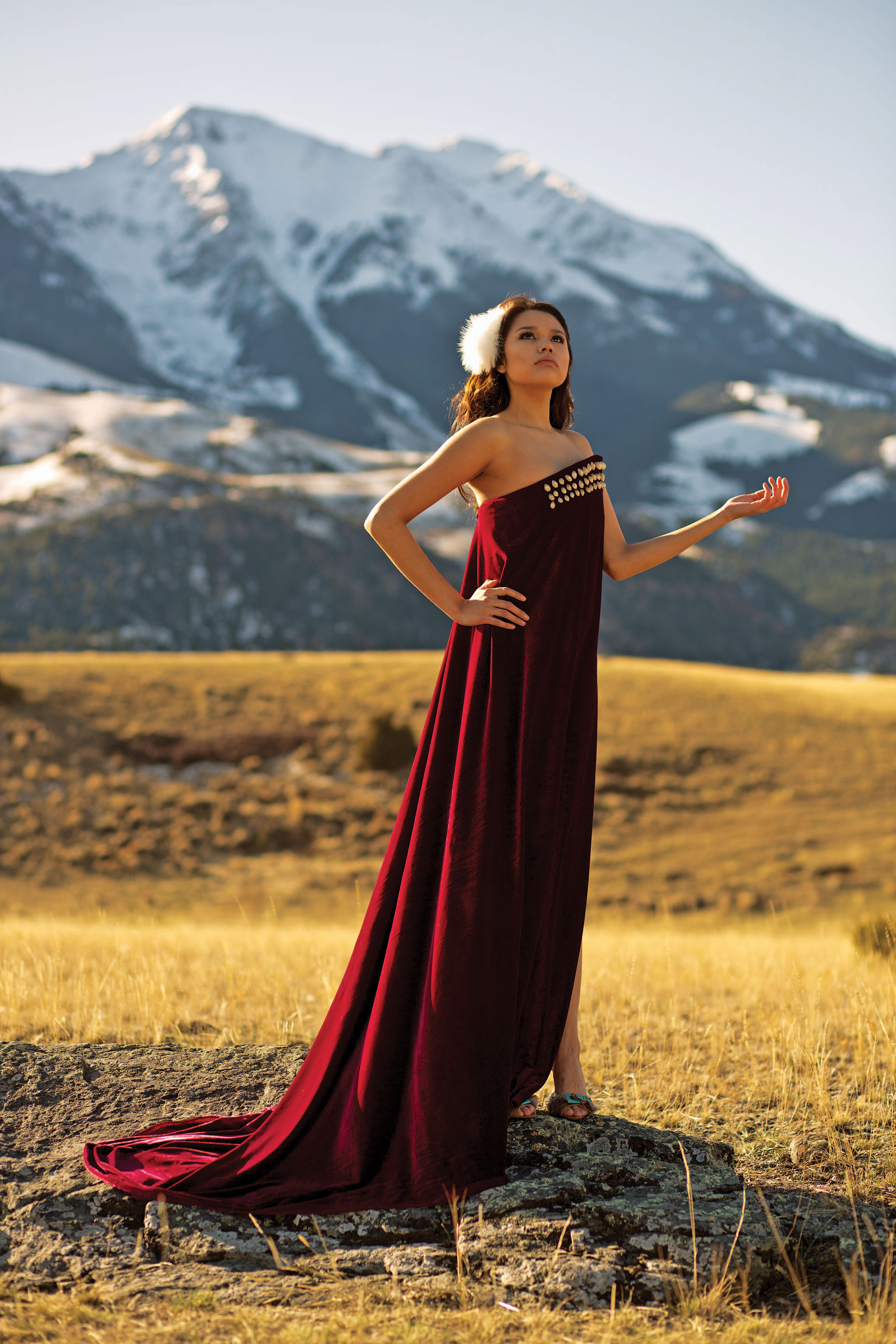
Jolonzo Goldtooth
Navajo
Age: 29
Location: Farmington, New Mexico
Line: JG Indie
He grew up on the family cattle ranch on the Navajo Nation, but Jolonzo Goldtooth ranged far from home — to college, to Manhattan, to Los Angeles — before ending up back in New Mexico after graduation to live with his grandmothers. It was his grandmothers, after all, who had taught him to sew. And it was back on the family ranch with them that he would launch a fashion career with his own Scarlett O’Hara moment.
He had a degree in psychology from the University of New Mexico, a minor in Native American studies, and a post-grad background in office work, bank telling, and waiting tables. What he didn’t have were money and a career path.
“My sister was moving and there was this curtain — a red, kind of ruby-maroon color silk curtain. It was a pretty big piece of fabric that she was just throwing away, and she asked me if I wanted it.” Inspired by Japanese culture, and with the addition of a snow leopard-print scarf and a jacket from Goodwill, he transformed his find into a youthful obi-wrapped kimono dress, and a career was born.
That was early in the summer of 2012. By August, Goldtooth’s amateur status was setting him apart during his first show, for the Navajo Arts and Crafts Enterprise Fashion Show at the Navajo Nation Fair in Window Rock, Arizona. “There were other Navajo designers, and they had very contemporary traditional design aspects as far as Navajo goes — using velveteen, a lot of silver, conchos,” he recalls. Goldtooth’s looks, though sewn using Native techniques (he had learned beading on the powwow circuit), were inspired by something altogether different: his fascination with Japan and the Japanese punk fashion trend harajuku. “I was definitely the black sheep of that group. And I only had eight looks.”
Black sheep or not, after the show, his career began to snowball. Goldtooth’s now creating one-of-a-kind pieces, showing in New York City, and expanding to include a men’s collection — all as hands-on as that first curtain obi.
“The way I design, everything is handcrafted,” he says. “I make the patterns myself; I do the draping. Nothing is pre-produced. I produce everything, right down to every little stitch, and I take strong pride in that.”
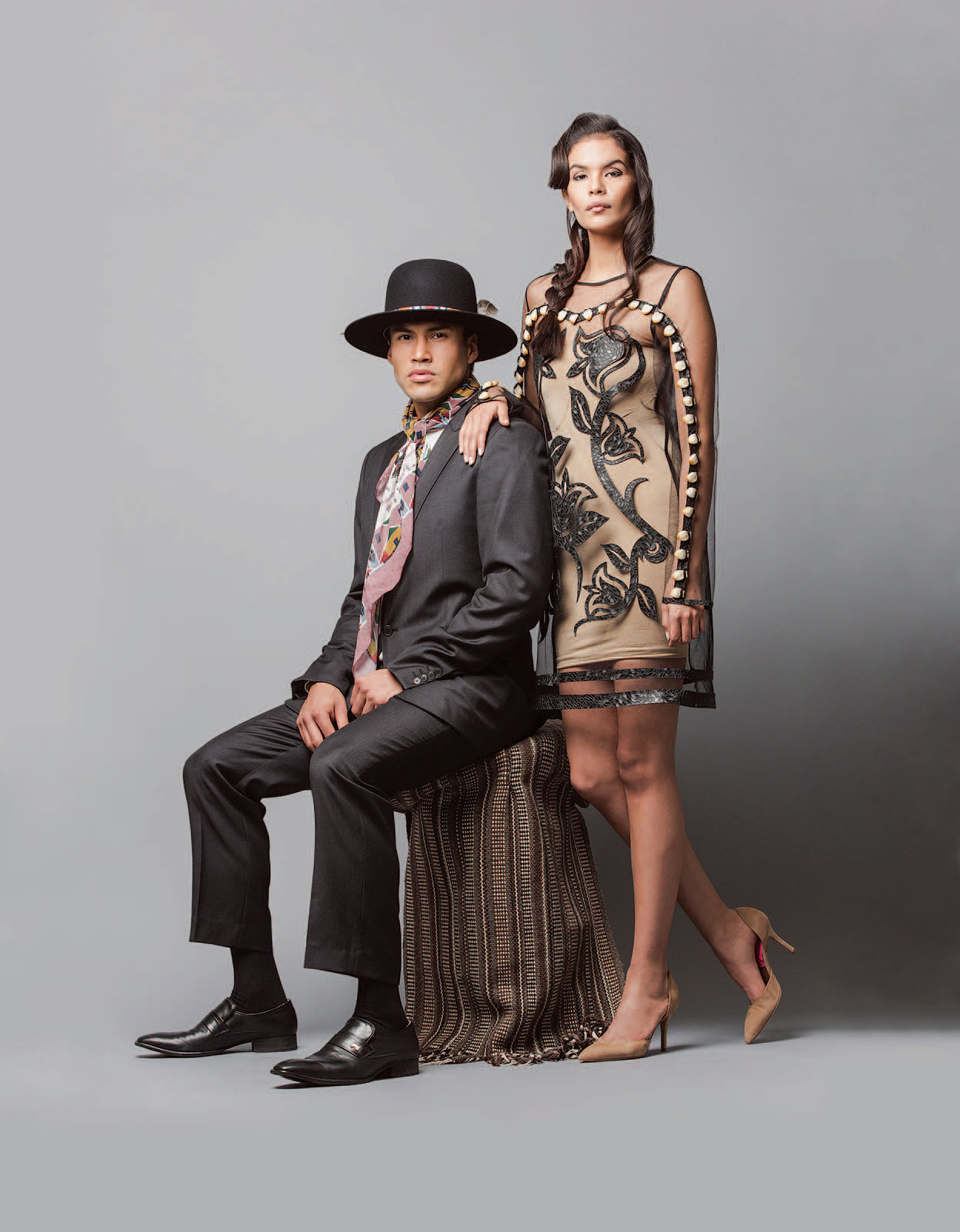
Bethany Yellowtail
Crow, Northern Cheyenne
Age: 26
Location: Los Angeles
Line: b.YELLOWTAIL
As a child in southeast Montana, where her father is a cattle rancher, Bethany Yellowtail began picking up her skills from relatives and schoolteachers. After seeing the 2006 remake of The Pink Panther, Yellowtail made her first ensemble: a pink suit similar to the one Beyoncé donned on-screen. When her best friend couldn’t find something flattering to wear for prom, Yellowtail made her dress. The next big step was moving to Los Angeles to attend the Fashion Institute of Design & Merchandising.
After graduating in 2009, Yellowtail worked in corporate fashion for lines such as BCBGMAXAZRIA. But she felt something was missing. “As an indigenous designer, it’s a lot more thought-out; it’s a lot more cared-for in the sense that it’s carrying out culture,” Yellowtail says. “Fortunately and unfortunately, I’ve worked for fashion brands that put out Native-inspired collections. And I wasn’t in the place to say, ‘No, that’s not how you do it.’ I saw that and thought, That’s not the way I was taught.”
Her desire to represent herself and her culture appropriately led her to start her own line. Launched in January, b.YELLOWTAIL targets a bold, modern woman and incorporates the designer’s Native heritage and home. “I love my community; I love where I come from,” Yellowtail says. “I feel like when I design that I’m designing with a much bigger purpose, and I’m representing not only my nation but other nations as well — Native people.”
Yellowtail knows her audience is limited to people who are seeking quality clothes and who want to support a Native artist. “The customers who I’m trying to reach will come, and they are going to come because they are looking for a brand that is deeper and bigger than just great clothes,” she says. “People are going to keep coming back because they understand the history and the cultural value of what I’m doing. And those are the people I want. I’m doing it out of a good place and out of love.”
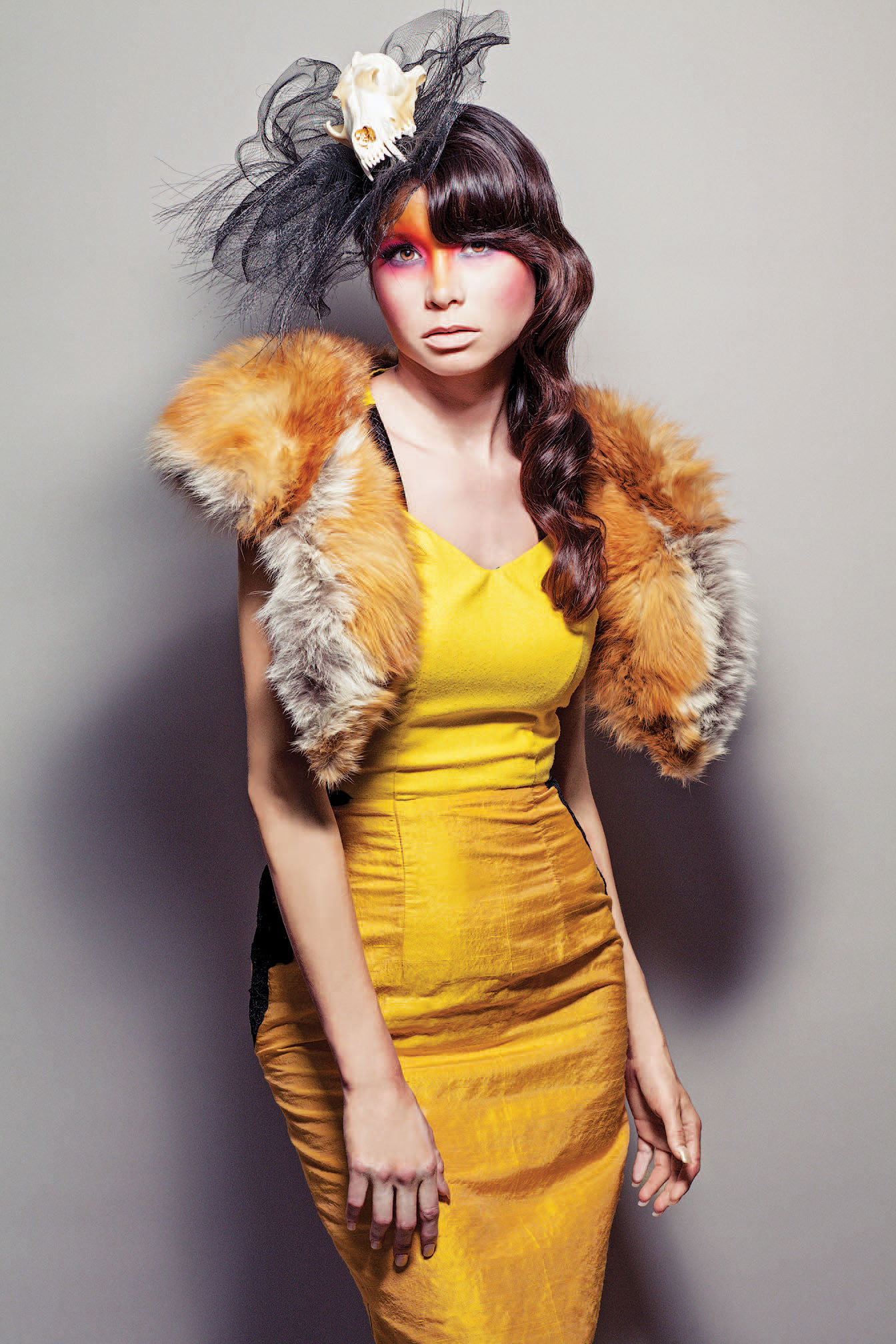
Sho Sho Esquiro
Kaska Dene, Cree
Age: 34
Location: Vancouver, British Columbia
Line: Sho Sho Esquiro
For three months leading up to the J Autumn Fashion Show, Sho Sho Esquiro worked 18 hours a day designing, sewing, and editing her “Worth Our Wait in Gold” collection for the big Paris show that would transform the Eiffel Tower into a catwalk. For Esquiro, who was representing her native Canada, the show was more than an opportunity for her clothes to be seen: It was a platform for raising awareness.
Inspired by the more than 1,200 unsolved cases of indigenous women in Canada who have been murdered or gone missing since 1980, the collection signifies Native women waiting for justice. “It’s important for me to bring awareness to important subjects like that,” Esquiro says. “I was very honored to have that opportunity and that platform, so I thought it was important to bring a purpose to that whole show.”
Since the epic show, the self-described “self-learning” designer has been pushing herself even harder. No stranger to tough stuff, she grew up in the Yukon sewing clothes for herself and her three siblings, using the Sears catalog as inspiration. Now her ideas and materials might spring from politics, elders, music — even a sweater from a thrift store.
“It kind of just comes organically,” Esquiro says. “I don’t force anything. People
Source: https://www.cowboysindians.com/2015/08/first-nations-fashion/