
GHIN
FRONT NINE
If you haven’t watched the NLU Club Championship yet, I’d encourage you to set this edition of G&T down and come back to it after you’ve taken it in. Not because I am going to spoil the result, but because it’s a piece of content we’re really proud of, one that was painstakingly pulled together with humor and artistry and whimsy. It was born from a question one of my kids posed six months ago: Dad, who is NLU’s best golfer?
At least for 2024, we have an answer.
If you have watched the NLU Club Championship, at least part one, then I’d like to take this opportunity to address something about my own game that’s been plaguing me in recent years, and I think having an entire round on tape for the first time since Strapped: Baltimore finally helped crystalize things for me.
I cannot stop beating up on myself on the golf course.
And it’s both embarrassing and unbecoming.
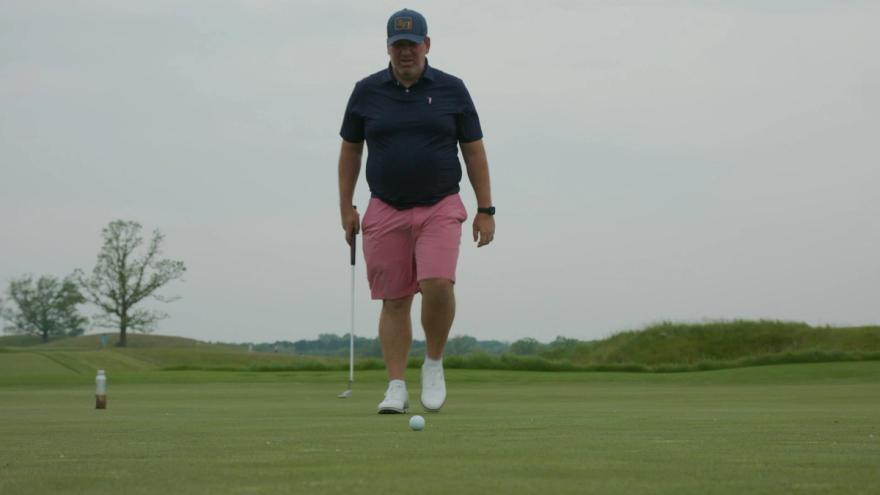
A year ago, we had the first edition of what we’re calling House Meetings at NLU, where we gather together on a stream and talk about the state of our golf games. As an exercise, we threw out a topic: What’s one thing we would borrow from another golfer at NLU if we could steal from them?
The answers were fairly predictable: Cody’s tempo, Soly’s fearlessness over short putts, Ben’s power, Tron’s bulldog approach in match play. But Ben made everyone chuckle when he said he’d like to steal something from me: My high expectations, because I seemed livid after every shot when I didn’t hit it perfectly.
It was all in good fun. He was just trying to tell me not to be so hard on myself. Golf is a hard enough game, and no one needs to talk about how much they suck after each imperfect swing.
But my on-course self-loathing, I understood, had now mushroomed into my entire golfing personality. The phrase my grandfather used to calmly deliver to his sons and daughters — I’m sorry to say this, but you’re not good enough to get this mad — apparently did not stick with me.
Even though I was aware it was becoming a problem, I couldn’t rid myself of it. I didn’t even have to play poorly for the monster to come out. This year, I played in the club championship at my country club, and was slotted into the 4th handicap bracket, guys who are 10 and under. I actually won my first two matches, shooting 81 and 77. But by the second match, the guys in my group informed me that the next time I hit a shot and snarled, turning away in disgust at what I perceived to be poor contact only to have it land on the green, I owed the foursome a bucket of beer. I laughed, but I got the message.
The Midnight Troubadour
Tough and timeless, this polo is built for the long ride. Featuring a crisp, non-collapsing collar and a rugged, stretchy fabric, it's the perfect shirt for any cowboy's wardrobe.
In the championship match, I birdied the first hole to go 1 up and started to dream about how cool it would be to say I won a flight at my club championship. I then proceeded to play like garbage for the next 13 holes and lose 5&4. I looked like a guy who couldn’t break 90. Briefly flirting with the idea that I might be okay at golf sent me into a tailspin.
I’m not sure how exactly we arrived here. I’ve read the Bob Rotella books that everyone recommends, as well as Zen Golf. I bought the audiobook version of Lynn Marriott and Pia Nilsson’s Vision54. But none of it has stuck with me for very long.
It’s not that I think I’m good at golf. I know I’m a hack. I know I swing over the top and my lower body looks encased in cement and that I have the swing of a beer-league softball player. But a lot of days I can fool myself into thinking I’m okay, which is probably the story of most golfers. No one would look at my swing and imagine I could break 80, but sometimes that happens, even in matches where I have to hit every cup and abide by every rule. When it doesn’t happen, I’m probably subconsciously eager to be critical of myself because I want to be first in line to do it. I don’t want anyone to quietly whisper to themselves: This guy thinks he’s good?
It’s an interesting psychological pickle, and I’m not sure how to overcome it. I have a mixture of Jon Rahm’s anger and Jordan Spieth’s need to outwardly process all my demons and none of their talent.
Instead of trying to break 80, I think a good goal for me this fall will be to try and play a round without uttering a single negative comment about my swing, the contact or the result. That might be too big of an ask after years of fear and loathing, but I kind of like the ambition of it.
BACK NINE
A country club that had existed in Baltimore for more than 100 years died this month.
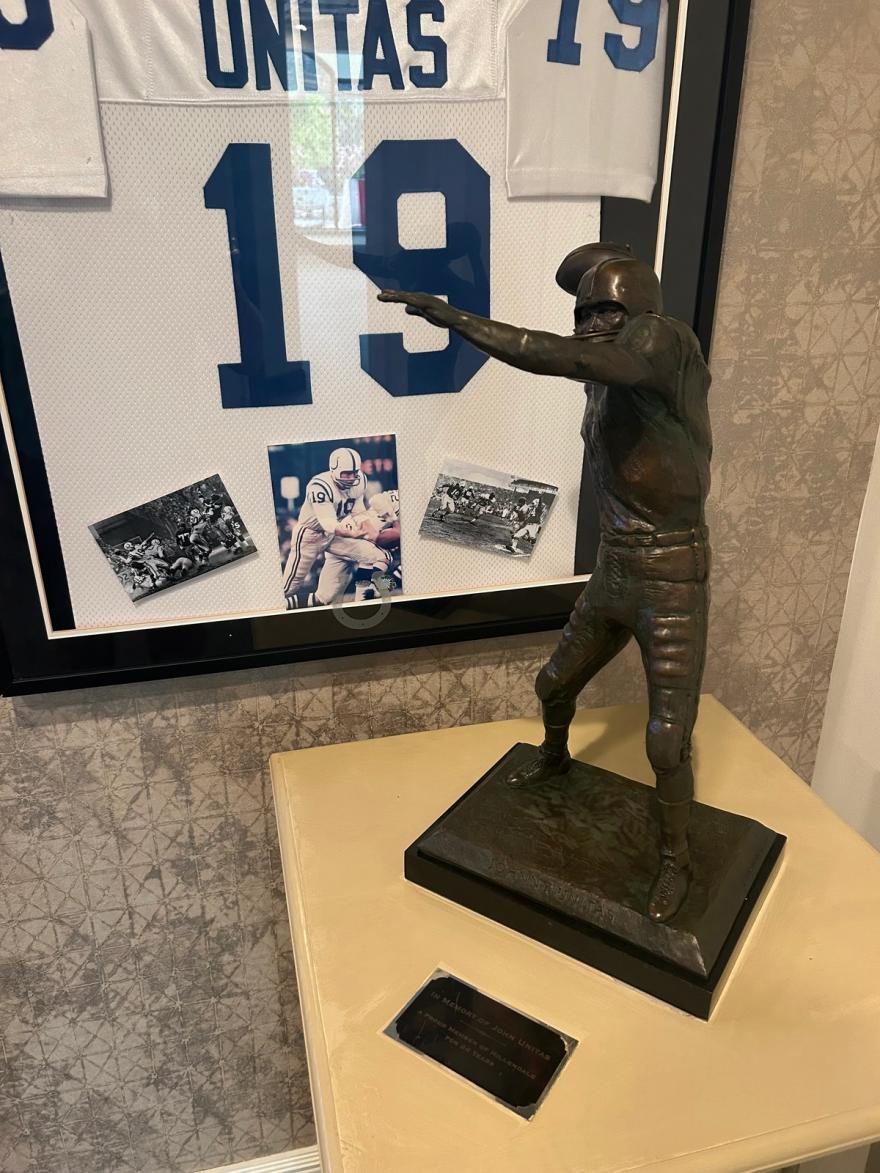
It wasn’t my club. In fact, I’d been there only a few times for junior tournaments, and sadly never played the course. But I certainly admired Hillendale Country Club’s reputation. It wasn’t pretentious or ostentatious. The members all felt like they knew each other. It was a solid, community-oriented club. Johnny Unitas was a member there for 25 years, and the club still had a statue of him and a framed jersey of his in the lobby.
If you’re a daily fee golfer, I suspect it’s hard to feel sad about a country club disappearing. You might even experience a whiff of schadenfreude. But I’m bringing it up here because of the way it died.
One minute it was alive, the next it was gone.
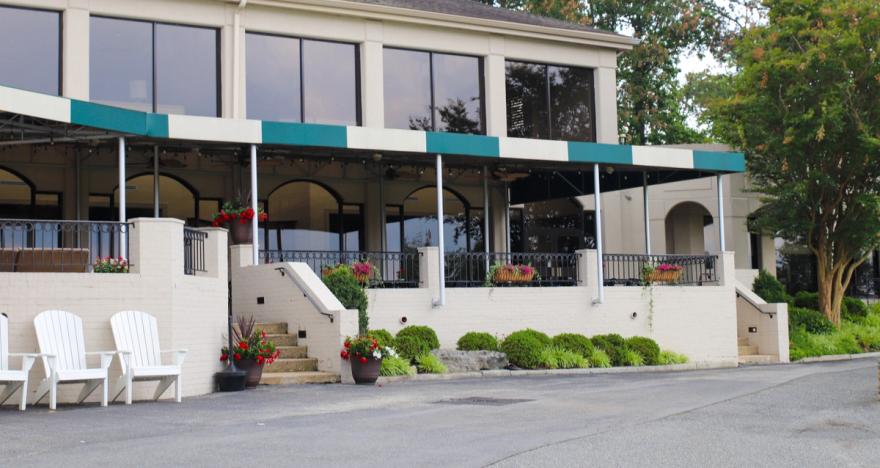
Normally you’d imagine a country club might die after a long period of decline. It would be in hospice care for some time, then eventually get shut down with dignity. Hillendale was shut down with little more than a week’s notice to the membership. There was an email asking members to attend a meeting, then the announcement that it would close in eight days.
Even in the months leading up to its closure, Hillendale was still adding members, still accepting big checks for an initiation fee. The year prior to shutting down, it renovated the bar, added two simulators, and re-did the irrigation system. The week before its closure was announced, it opened a new $500,000 short game area that Loyola University had donated to the club.
The way one member described it to me was like going out for a walk and getting hit by a car.
The financial details are mildly interesting but ultimately unimportant. The club had a lot of debt, I was told, and they had been quietly kept afloat by a wealthy member, someone who expressed genuine interest in buying the club. When he ultimately decided not to buy the club, it was essentially over. There is some talk that he could still purchase the club now that it’s in bankruptcy court, but no one really knows. Even if by some miracle it did roar back to life, it would never be the same.
The one aspect of the whole affair that made me want to share its fate in this column was the living wake its members put on in its final days.
They held an impromptu tournament and hired someone to play the bagpipes all day long. They paid for a bloody mary bar. They shot off fireworks.
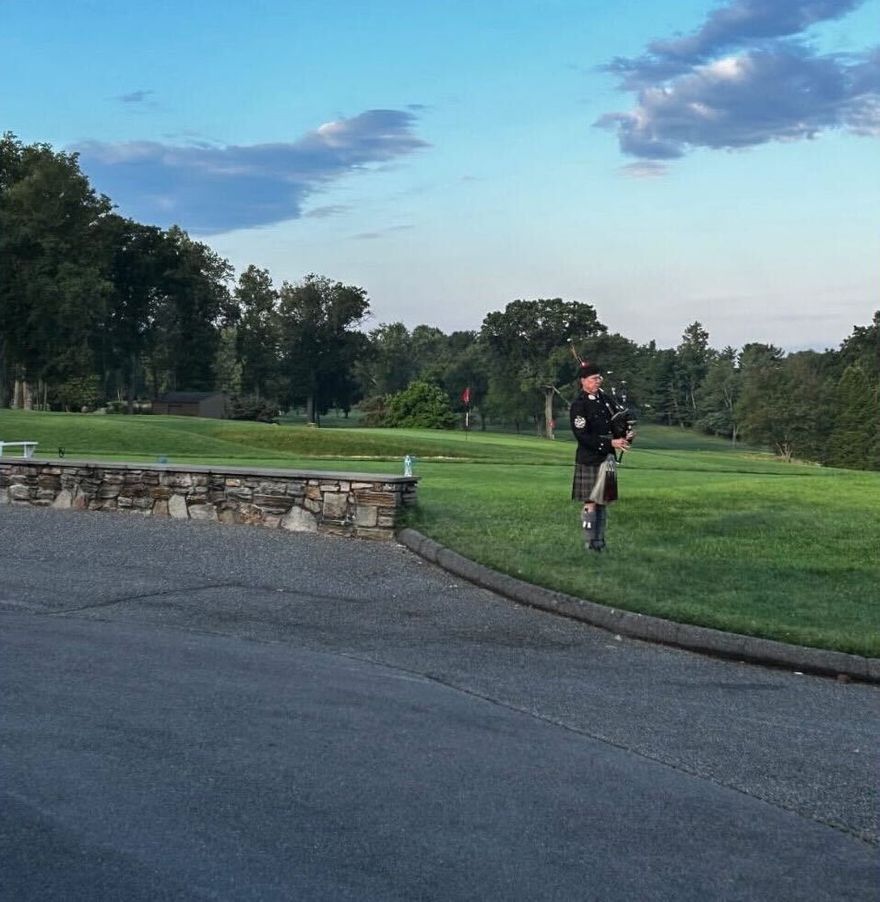
“It was kind of a weird, sad celebration,” one member told me. “Every time you played a hole, you thought: Well, here is my last chance to ever birdie this.”
Some of the members had
Source: https://nolayingup.com/blog/ghin-and-tonic-vol-19-kvv