
Cover Photo provided by Mr. Jim Hartsell
Editor's note: When it came time to roll out our (long overdue) new website we wanted to do something celebrating the people we've met through golf and the places that are still out there for us to explore. We've only scratched the surface on who we need to meet and where we need to go. Jim Hartsell embodies that spirit to the fullest. I met Jim through Sweetens Cove a few years ago and we became fast friends. He's spent the last two-and-a-half decades exploring Scotland and digging deeper than nearly any American I know, non-Tom Coyne division. As an Registered Building Architect, he brings a unique perspective to golf travel, both on and off the course. We're thrilled to roll this series out over the next few months and hope you enjoy. - Tron
The Hidden Soul of the Game
Cruden Bay Golf Club, A Birthday Celebration
By Jim Hartsell
Much has changed since my first trip to Cruden Bay Golf Club in August of 1994. The course was then largely unknown to visiting American golfers, who ventured north of St. Andrews mainly to visit Royal Dornoch. I first learned about it from Michael Bamberger’s classic 1992 novel To The Linksland. In those days, there was a sense of adventure and discovery in traveling to what was one of the world’s greatest hidden gems. The welcome extended to visitors in the small, utilitarian white clubhouse was warm and sincere. The course - designed by the impressive combination of Old Tom Morris and Tom Simpson - was wild, fun and an altogether unique layout. I am happy to report that these things have not changed in the intervening 25 years. Cruden Bay remains one of the friendliest and most welcoming clubs in golf. While it has climbed high in the world rankings since 1994 - and can no longer be considered “hidden” - it is a course that must not be missed when visiting Scotland.
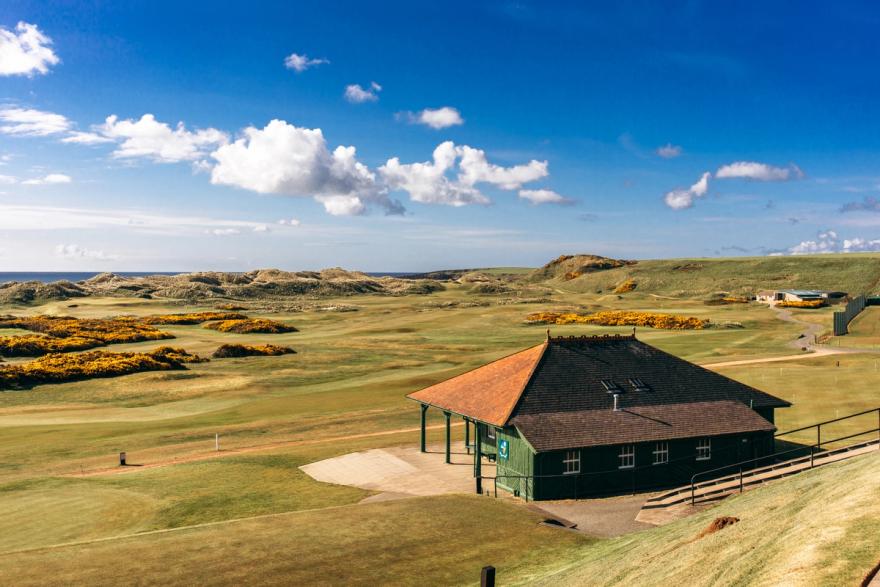
The Original Club House/Starters Hut at Cruden Bay. Photo provided by Mr. Jim Hartsell
Change, when it does come, does not proceed with haste in an ancient place like Scotland. Unlike Americans, Scots generally take a more measured approach when considering things like road infrastructure improvements, rightfully taking the time to consider all the effects on their beautiful country. The drive up from St. Andrews was not an easy one in 1994. Today it is made with relative ease, given the completion of the A90 bypass of Aberdeen. This new stretch of motorway has cut at least 30 minutes off the total drive time. Not that I recommend bypassing the famed granite city of Aberdeen, but time is precious on a Scottish golf trip. While you may feel a slight pang of regret as you head north on the A90 at Stonehaven - knowing you are only 2 minutes from that wild and wonderful clifftop golf course - difficult choices must be made. I urge you not to bypass a day at Cruden Bay when planning your dream golf trip.
The Midnight Troubadour

Tough and timeless, this polo is built for the long ride. Featuring a crisp, non-collapsing collar and a rugged, stretchy fabric, it's the perfect shirt for any cowboy's wardrobe.
Walking from the car park around the beautiful modern clubhouse (another change since 1994) you are suddenly confronted with a panorama of dunes and linksland that is unmatched. In the distance stands the impressive cliff top ruins of Slains Castle - the inspiration for Bram Stoker’s Dracula - as if additional enhancement of this glorious scene is necessary. It is the most stunning “reveal” in golf.
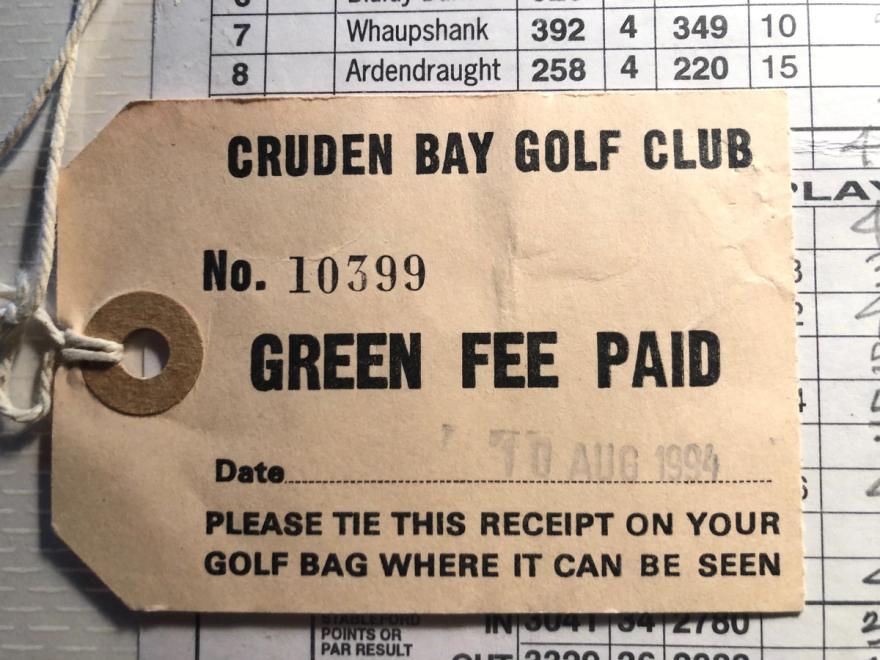
Jim's 1994 Cruden Bay bag tag. Photo provided by Mr. Jim Hartsell
It is believed that golf was played on this dramatic linksland as early as 1791. The genesis of the current links dates to 1894, when the Great North of Scotland Railway Company commissioned the course and a stunning hotel (sadly now demolished) to promote railway tourism. Old Tom Morris himself provided the initial routing. Cruden Bay Golf Club was founded in 1900. The current course layout dates to 1926 and is the work of noted English architect Tom Simpson.
As we arrived on a sunny May morning, the wind was already steady at 15 mph. Entering the brilliant pro shop (one of the best in Scotland) I was greeted warmly by Head Professional Neil Murray. Mr. Murray asked if I had played the course before. I explained that I had played it many times, but it had been almost 20 years since my last visit. “Well, you will find it much the same as you remember, except for the 9th and 10th. We built a new 9th hole a few years ago and relocated the tee on the 10th", said the friendly pro. I was soon to find out the stunning effect this seemingly minor change had made to the physical experience of playing Cruden Bay. We talked about my memories of the course, as I purchased several items from the well-stocked shop. I mentioned in passing that it was my son Jake’s first trip to Cruden Bay and it also happened to be his birthday. That off-hand comment led to one of the highlights of our entire trip.
The original clubhouse, one of my favorite buildings in Scotland, serves as the starter’s hut. At the time of our visit, it was being converted to a golf museum. The friendly starter greeted me and asked if an American called Chris could join our twosome, since it was his first visit to the course. I was happy to be a tour guide and found that I immediately remembered the correct lines off the tees - in spite of the almost 20 year gap in my experience. On almost every hole, there is an appropriate line that is most likely not readily apparent from the tee. One of the most joyous aspects of links golf is the strategy of where to land the ball on the ground. This is especially true on the tee shots at Cruden Bay. I think it may be the best “tee shot” course in the world.
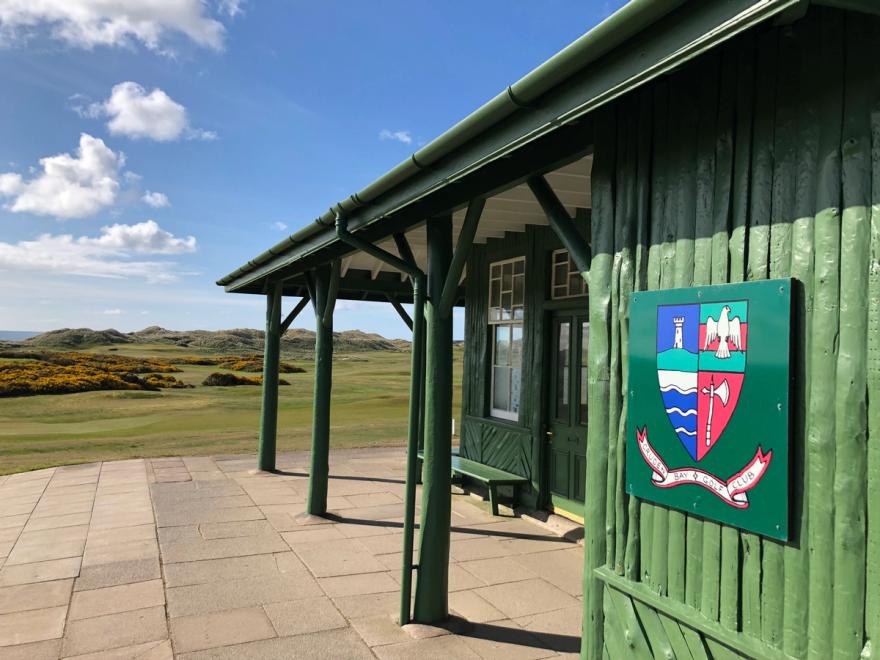
Original Clubhouse at Cruden Bay. Photo provided by Mr. Jim Hartsell
It’s difficult to think of a place that is more fun to play than Cruden Bay. The opening tee shot should favor the left side and must avoid a bunker, but in general does not cause excessive anxiety. The approach to the 2nd, to a dramatically raised plateau green, is one of the best approach shots on the course. At the 3rd, one of the great short par fours in the world, you start to enter the wild heart of the links. At 268 yards, the blind tee shot must land between dunes on both sides, which will funnel the ball down to the perfectly sited green. A well struck tee shot may result in an eagle try, but if you are too aggressive double bogey or worse is in play. This is a perfect golf hole.
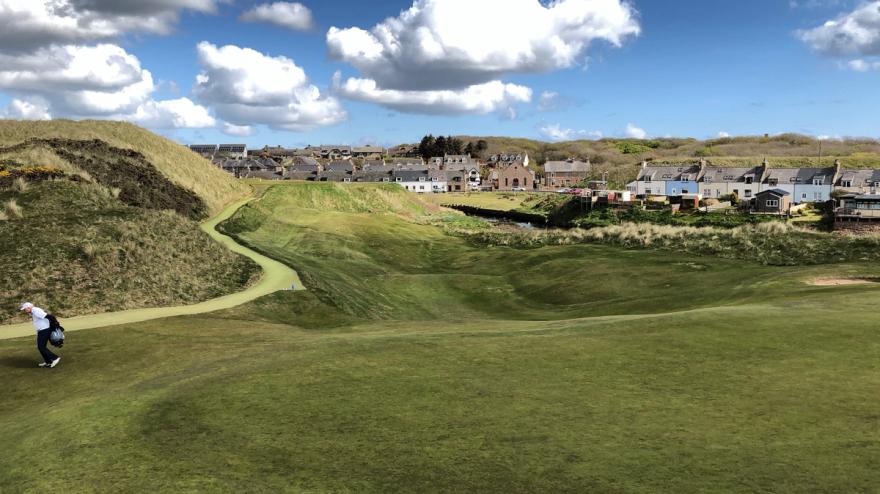
3rd at Cruden Bay. Photo provided by Mr. Jim Hartsell
It would be natural to expect a let down after the sheer joy of the 3rd, but it is not to be. Quite simply, the 4th hole at Cruden Bay is one of the great par threes in golf. The tee is set behind the 3rd green, with the fishing village of Port Erroll and the river (called the Water of Cruden) to the left, and at 196 yards plays slightly uphill over a valley between the dunes and the river. The green sits perfectly among the massive dunes. Standing quietly on the 4th green at Cruden Bay, with the sound of the wind blowing through the grass covered dunes, it is impossible not to feel why Scotland is the true home of golf.
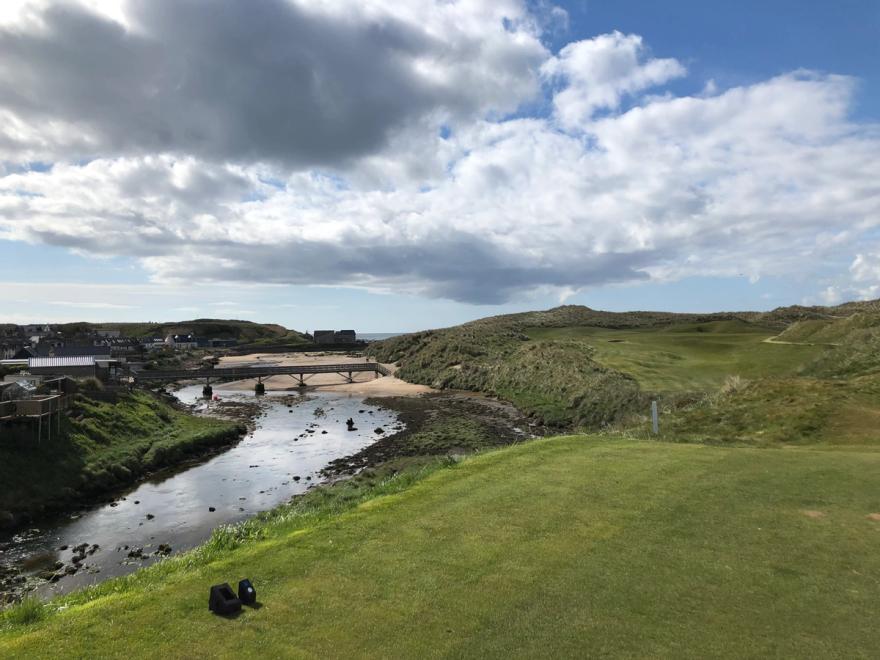
View of the 4th Cruden Bay. Photo provided by Mr. Jim Hartsell
Beginning with the tee shot at the 5th, you enter the
Source: https://nolayingup.com/blog/hidden-scotland-cruden-bay-golf-club