
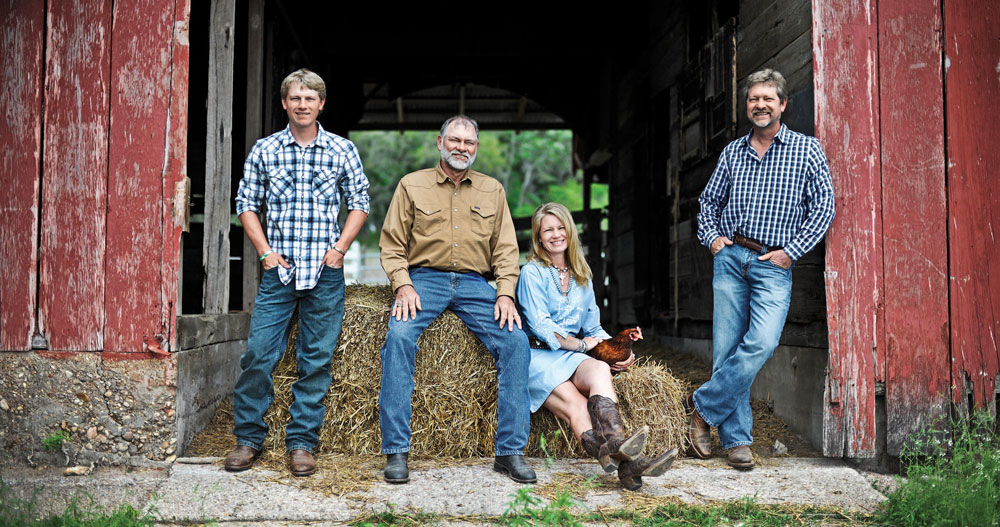
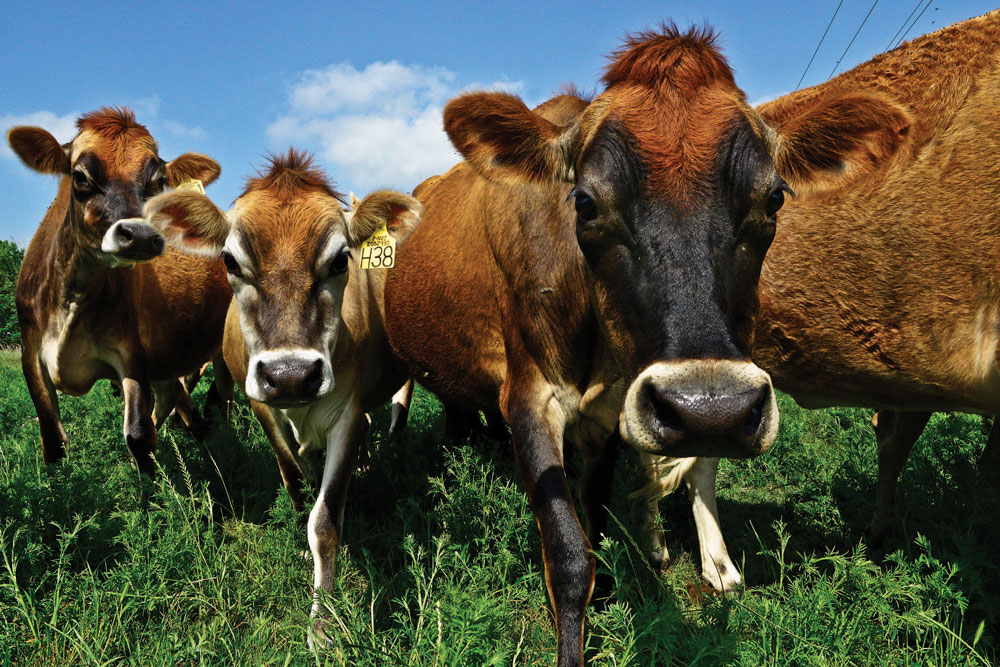
Just outside of the little town of La Grange, Texas, population 4,641, four generations of the Frerichs family have been milking Jersey cows on their farm over a span of nearly 60 years. That adds up to more than 36,000 milkings and innumerable memories — though it all started with a wedding gift of just one cow.
More than 100 years ago, Henry and Anna Frerichs bought the 175-acre farm. They had three children in the home, and their youngest, Edgar, decided to make the farm his living. In 1949, when Edgar was 29, he married 18-year-old Marian Mueller, and the two received a Jersey cow as a wedding present.
check out our premium collection
At first, the farm was diverse. Edgar and Marian kept chickens, turkeys, pigs, and cows alike. But eventually they decided to focus on dairying — growing their herd, adding acreage, and building an additional barn with the help of their sons, Robert and Ralph. Then Ralph married Faith, and she, too, pitched in, along with their growing sons, Bradley and Neal.
Edgar passed on in 2012, but Marian, now 82, continues to serve as matriarch. Today, the family manages two herds: a commercial one and a much smaller herd of about 20 cows, which produces the raw milk the Frerichs sell on their property.
Located just an hour east of Austin, the farm feels worlds away from city life. In the early morning hours, as Faith tours the property, the animals squawk and moo and bleat at her, seeing the promise of food. A longhair gray cat named Oscar follows behind, slinking across the tops of fence posts and in between her feet.
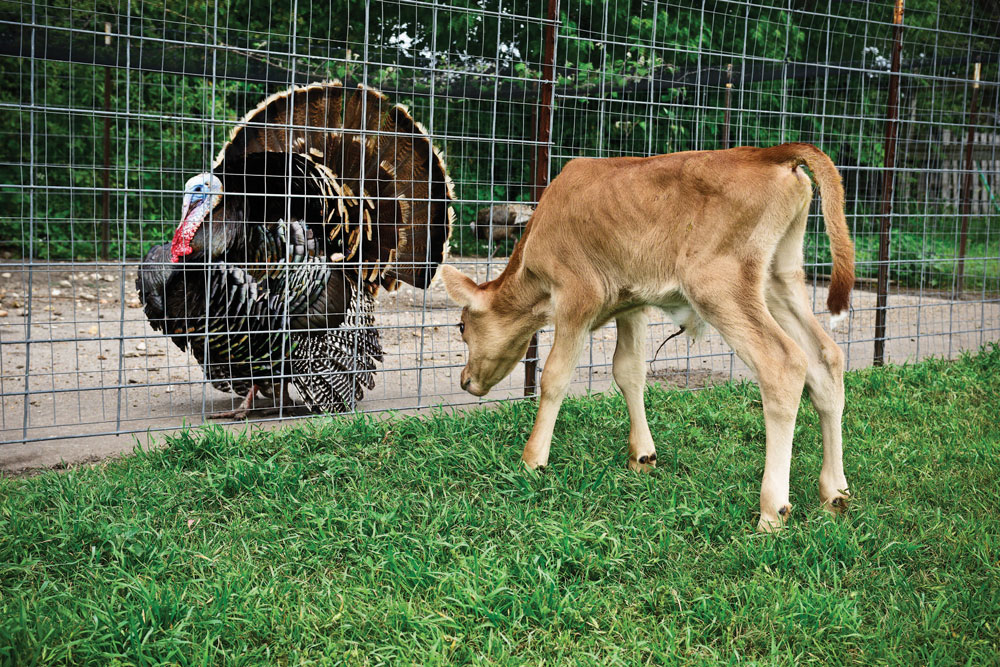
Near the front of the farm live a Sicilian donkey and a famous cow, Jingle Belle, who has starred in several Blue Bell ice cream commercials. A short hay ride away are the dairy barn and the pen of Faith’s favorite pig, Ethel.
Though the setting looks idyllic, Faith and Ralph have weathered great hardship here. In January 2008, Bradley was killed in a car accident during his senior year of high school. The following year brought a record-breaking drought to Central Texas and continued record-low milk prices. Then, on September 4, 2011, wildfires ripped through the region. The Frerichs lost 200 acres, the little hay they had made, and 5 miles of uninsured fencing. Neal and Ralph still vividly remember pouring water on Texas live oaks at midnight — and then again two hours later, and then at 5 in the morning — trying to keep the fire at bay. And, of course, the Frerichs remember Bradley every day.
“Bradley would stop and take pictures of sunsets with his phone as he worked on the farm,” Faith says. “We see the sunsets almost every day; every sunset reminds me of him. If we worked in a city or a building, we wouldn’t have the opportunities to see the sunsets like we do.”
Despite the struggle, the Frerichs continued to do what they have always done: They farmed. And as they worked, they continued to adapt their farm to their own needs and the needs of their customers. One need they say has grown exponentially in the last decade, thanks to the increasingly popular local foods movement, is their customers’ desire for farm-fresh milk.
The Midnight Troubadour
Tough and timeless, this polo is built for the long ride. Featuring a crisp, non-collapsing collar and a rugged, stretchy fabric, it's the perfect shirt for any cowboy's wardrobe.
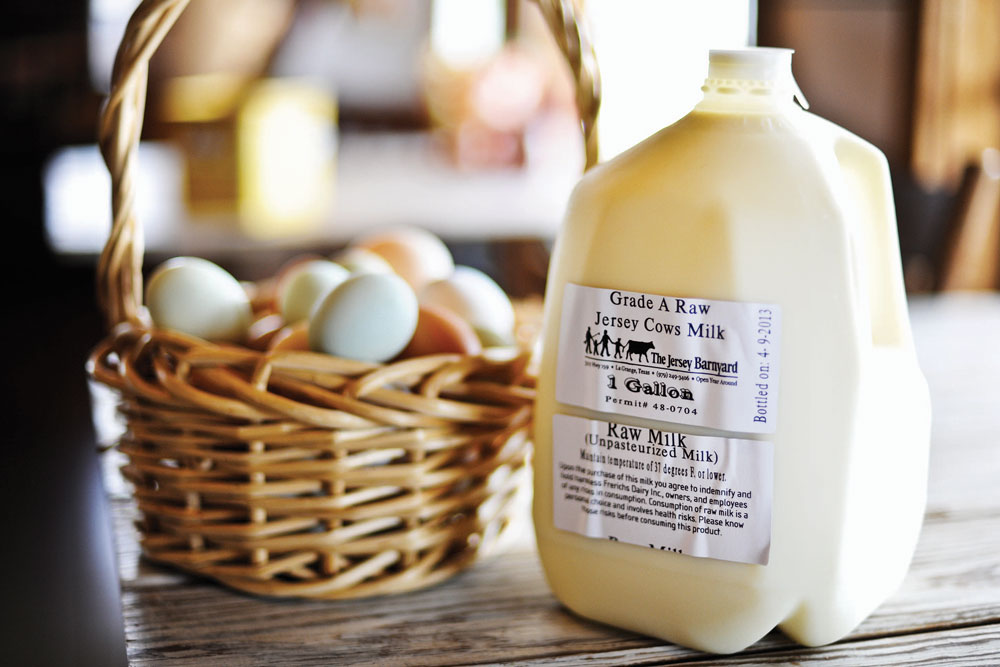
“Ten years ago, we couldn’t sell eggs,” Ralph says. “Now we can’t keep up with the demand.” And the same goes for milk. The Frerichs keep a small Jersey herd that are fed only grass and from that herd produce raw milk, which they sell from the gift shop at the front of their farm for $7 a gallon.
Phoebe Judge, program director for American Micro-Dairies, an association founded in 2010 to help support and connect small dairies across the country, echoes the Frerichs’ theory. “The more people learn about dairy, the more it becomes folded in with the burgeoning local foods movement,” she says. “People think, If I can buy my broccoli down the road or my cheese down the road, why can’t I get my milk from someone down the road?”
Blogger and homesteader Jamie Huizenga says that the increase in demand is also about taste. “Honestly, once people do their own research and read about the differences between factory milk and pure raw farm milk, and once they try raw milk for themselves, there is no way you can go back to factory milk.” But, she adds, if raw milk is nowhere to be found, “there are many dairies now which are producing grass-fed, nonhomogenized, organic milk, which is low-temperature pasteurized and is an excellent substitute.”
Huizenga first made the switch to raw goat’s milk because she’d been having trouble bringing pregnancies to term. “To this day, my daughter has not needed an antibiotic,” Huizenga says. “I credit the raw goat’s milk greatly to this success.”
Just what does raw milk taste like? Huizenga’s daughter, Natanielle, who is now 14, describes it this way: “Raw milk is much creamier and thicker because it has all the cream in it. The first time I tasted raw milk, it was like melted ice cream. Pasteurized milk tastes like chalk to me.”
Currently, demand outpaces production, but entrepreneurs thinking about getting into the business would be well-advised to consider the many challenges a micro-dairy farmer faces. They range from finding affordable equipment with which to pasteurize (right now there are a few relatively expensive options on the market) to the rising cost of grain. To meet these challenges, farmers are getting creative. The Frerichs, for example, switched their raw-dairy herd to grass only. Many farmers are buying used vat pasteurizers. And American Micro-Dairies is working to solve this Catch-22: Dairying is a hard field to break into because farmers are too busy to explain how to do it.
“They don’t have time to write an instruction manual or even connect with the people down the road who are interested in starting a farm,” Judge says. To help combat this, one of Judge’s goals as program director is to establish online forums on the American Micro-Dairies website divided by region, so that farmers can connect directly with one another across the miles.
But there are also distribution challenges, which Judge counts as the most difficult. The laws about selling raw milk are myriad and confusing, varying state by state and dating back to the Depression era. In some states, you can deliver raw milk to someone’s home. In others, that’s illegal. In some states, raw milk can only be sold if labeled as “pet food,” and in others, farmers aren’t allowed to advertise that they have raw milk for sale.
 https://www.cowboysindians.com/2013/07/small-farms-big-flavors/