
Whatever creation story you subscribe to, there was a beginning, and in that beginning, there was land — and the people who inhabited it. Whether or not we as individuals or members of a particular race or nation are aware of how and where we began, there is, nonetheless, that beginning. Those of us who are descendants of the first inhabitants of North America are fortunate in that we seem to be aware of our origins. We are also aware that those origins, more often than not, are connected to a place.
For thousands and thousands of years prior to European arrival, people inhabited every part of North America, from the frozen tundras of the Arctic to the steamy jungles of Mesoamerica. Everything needed to survive in a primitive lifestyle came directly from the physical environment. Edible fruits and vegetables and most animals — small and large, walking on the land, flying in the air above it, or living in the rivers and lakes — served as food. Many animals not only were the source of sustenance, they were also the raw material for clothing, shelter, tools, and weapons. Plants were a source of medicine, material for cordage, teas, insulation for winter clothing and shelters, and water. Trees provided materials for homes, tools, weapons, household accouterments, medicines, and winter horse feed. Dwellings were also made of soil and stone, or carved into stone. Stones of various types were used to make knife blades, tools, and projectile points. In short, the land provided; the environment enabled and sustained life.
check out our premium collection
As Native peoples moved beyond mere survival and many cultures began to thrive, there came an opportunity to consider their relationship with the land — its importance, habits, whims, and cycles. Practical knowledge evolved into intimate understanding. Eventually there developed an emotional and spiritual connection to the environment, and that connection led to beliefs and philosophies that shaped the hundreds, if not thousands, of Native cultures throughout the continent.
The Midnight Troubadour
Tough and timeless, this polo is built for the long ride. Featuring a crisp, non-collapsing collar and a rugged, stretchy fabric, it's the perfect shirt for any cowboy's wardrobe.
Central among those philosophies is the belief that the land is sacred and to be treated as such. It is our beginning. It is our source and our sustenance. It is the mother — in fact and in spirit. Our connection to that reality is represented in origin and creation stories, as well as stories of rebirth and affirmation. Almost without exception, each of those stories is associated with a place — be it a mountaintop, a hill, a valley, a cave, or a river. And each such place is sacred.
Indigenous North Americans occupied the length and breadth of this continent, so it is no surprise that sacred places are everywhere and numerous, likely numbering in the thousands. Many, of course, have been forgotten over time, and many remain in the margins of collective memory. Fortunately, not all have been forgotten.
The numerous sites have a particular, significant role in the history, culture, spirituality, and mythology of each Native tribe or nation. Furthermore, the separate clans, bands, or communities that comprise a nation or tribe may each have a place or area they consider sacred.
Each of the more than 500 ethnically identifiable indigenous nations still in existence has at least one origin story and many, many stories explaining a profound connection to the land. Consequently, all of us currently inhabiting the land — no matter our ethnicity or race — walk on sacred land or pass a sacred site frequently, if not every day, whether we are aware of it or not. None of those sites is more or less sacred than any other, and none of those stories is more or less compelling than any other. Each has a significance bound up with the tribe’s stories and history. Unfortunately, many sites are in legal limbo or have been altered by the encroachment and development of modern society; that, however, does not diminish their significance in the eyes and hearts of Native people.
Following are 12 sites within the boundaries of the United States sacred to at least one indigenous tribe or nation. Some are well-known, others are not. Some of the tribes or nations associated with them still exist, some are no longer with us.
They are presented as examples — a scant dozen meant to represent myriad sacred sites that are part and parcel of the beauty and magic of the continent, and especially the West. Not all of these sites are readily accessible, some are extremely difficult to get to by any motive means, and some are not accessible to anyone but members of the tribes or nations who own them or are connected to them. Whether they were constructed or altered, as small as an obscure waterfall or as monumental as an entire mountain, these sacred places are the other part of identity for people who knew the land, respected it, and loved it as a relative.
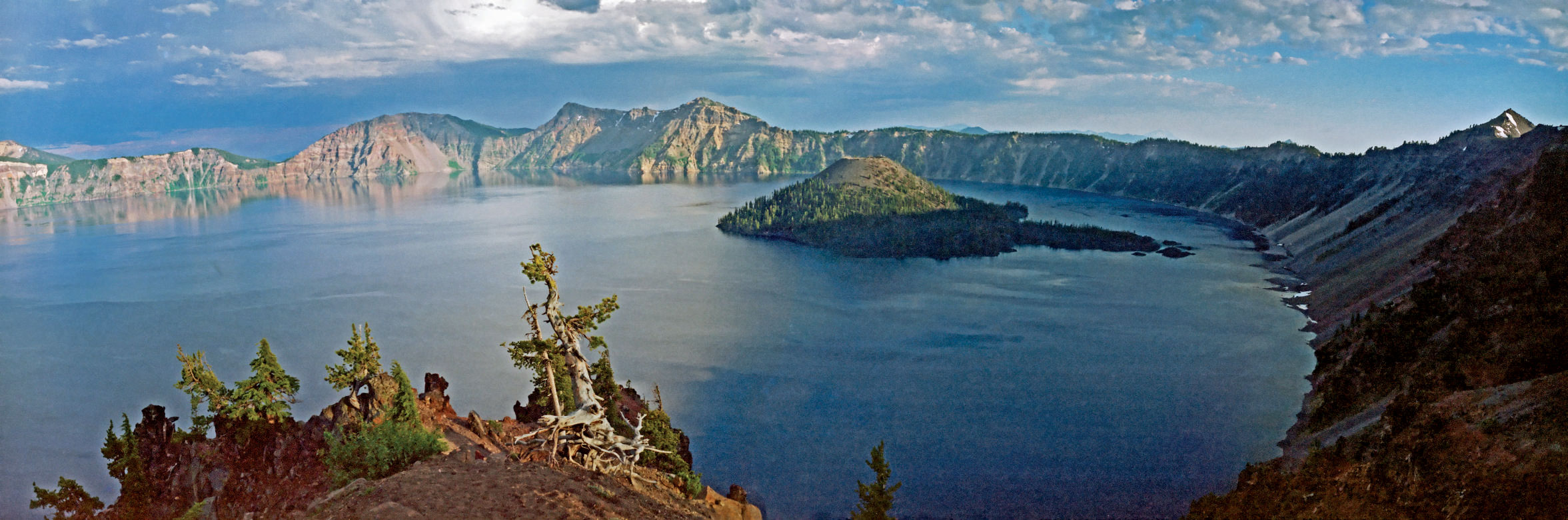
Crater Lake, Oregon
More than 7,500 years ago, a volcanic eruption blew the top off Mount Mazama and Crater Lake was formed. To the Klamath people, it was the site of an epic struggle between the ruler of the upper world and the ruler of the lower world. When Skell of the upper world defeated Llao of the underworld, Llao’s home, Mount Mazama, was destroyed. The mountain has been revered by Native peoples since their ancestors witnessed the catastrophic eruption and collapse thousands of years ago. Today the site is used for vision quests as well as feats undertaken to prove endurance and courage.
Blue Lake, New Mexico
High in the mountains of northern New Mexico is a body of water called Blue Lake. For nearly 65 years it fell under the legal control of the United States government as part of Carson National Forest. Under the Nixon administration it was returned to the Taos Pueblo in 1970. Even during the lake’s temporary stint as federal property, the Taos Pueblo people never lost their reverence for and connection to it. Such a lapse would have been impossible: The Taos people hold the spiritual belief that they originated from the lake.
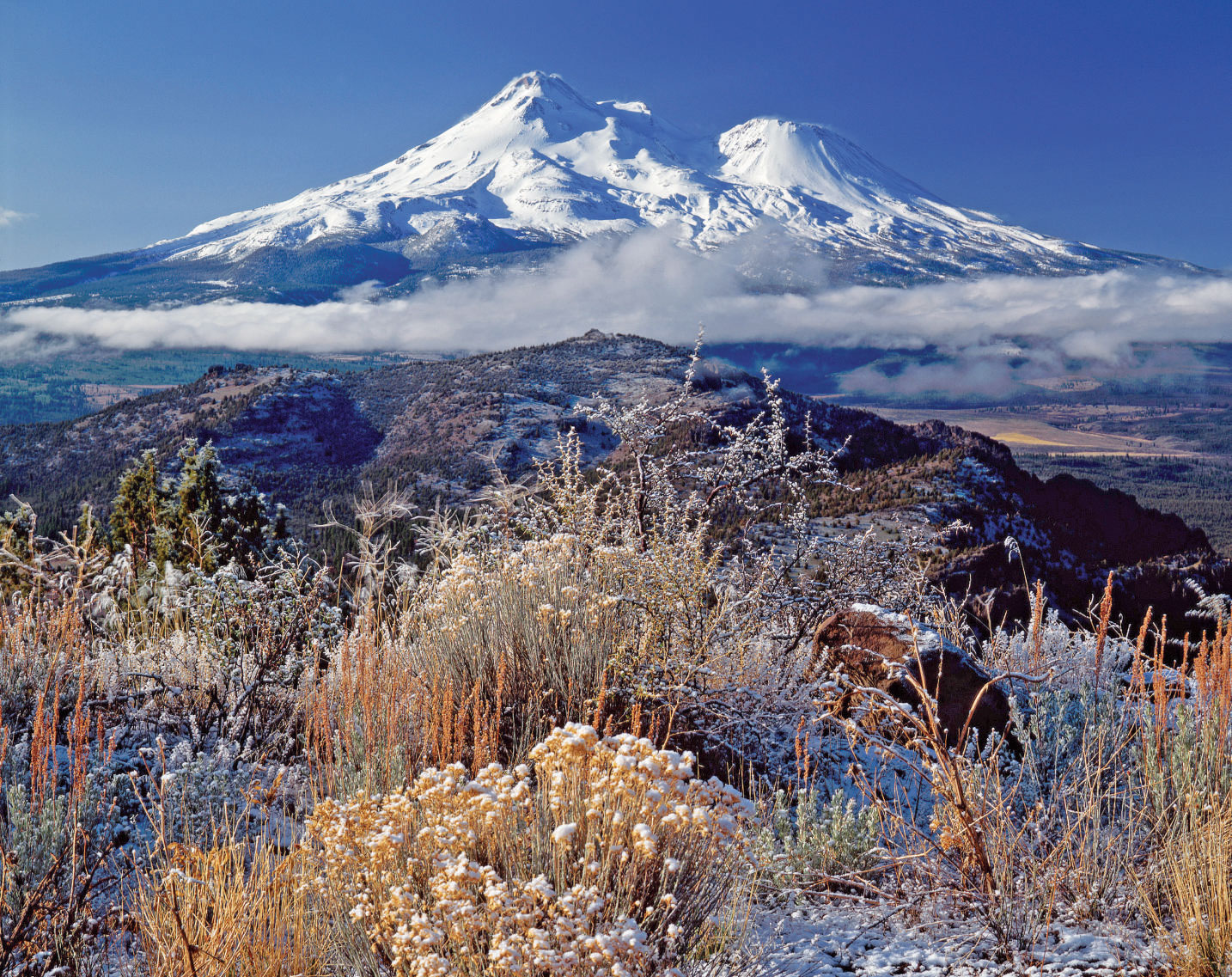
Mount Shasta, California
For thousands of years, several different tribes considered this snow-covered mountain in the Cascade Range of Northern California the center of creation; it was at the axis of territories controlled by the Shasta, Wintu, Modoc, and the Pit River tribes, and those tribes certainly lived in its shadow. The mountain also figured in the lore of the Karuk, Hupa, and Upper Klamath peoples. Eventually, with the first Euro-American contact in the 1820s, the white man discovered the area, along with its geographic grandeur and rich, ancient mythologies.
Cahokia Mounds, Illinois
A thousand years ago or so, as many as 20,000 people lived and thrived in a great city along the Mississippi River, just east of modern-day St. Louis.
Here in the rich bottomland of the Mississippi, a civilization of Mississippian peoples thrived, developing from small settlements in A.D. 700 to a complex chiefdom by A.D. 1000. One of the greatest cities in the world in its heyday and the most sophisticated prehistoric Native civilization north of Mexico, it was larger in A.D. 1250 than the London of the day. Mound-building, which began about A.D. 900, had made it a city of great monuments; some of the more than 120 mounds (only about 80 still exist) rivaled those of the Inca and Maya in size. The central ceremonial focus of these is Monk’s Mound — at 100 feet high, 1,050 feet long, and 964 feet wide, it is the largest man-made earthen mound in the Americas. Constructed like the other mounds of basket-transported soil and clay, Monk’s Mound at its base is actually larger than the Gr
Source: https://www.cowboysindians.com/2016/10/sacred-places-2/