
Great mountain climbers tend to share two common traits: an irrepressible attraction to places most of us can’t fathom without an armchair or a movie pass and a matter-of-fact attitude about it all.
“It’s what I love to do — just having that connection to gravity, experiencing that camaraderie, and living in the moment,” says elite rock, ice, and mountain climber Conrad Anker without a hint of anything beyond grounded, contented acceptance. “I don’t think any climber can ever plan to be one of the enviable few who are actually paid to climb for a living,” he adds. “I still have to pinch myself.”
check out our premium collection
At age 53, Anker has garnered more headlines over decades of spectacular climbs around the globe than the low-key Montana-based family man would ever let on. They include dizzying first ascents from Alaska and Baffin Island to Patagonia and Antarctica, to multiple expeditions in the Himalayas — where in May 1999 he would famously discover the body of legendary 1920s mountaineer George Mallory on the upper slopes of Mount Everest during Anker’s first of three summitings there.
Few mountaineers would run into as much media attention that year as Anker, who found himself not only at the helm of a recent Everest triumph but also part of a subsequent tragedy on Tibet’s 26,291-foot Shishapangma five months later. While on an expedition for an NBC documentary, Anker narrowly survived an avalanche that claimed the lives of two members of the team — cameraman David Bridges and Anker’s close friend and climbing partner Alex Lowe, one of the world’s most renowned alpinists. “I had more stuff go on in that single year than in all of my previous ones,” Anker would note.
The Midnight Troubadour
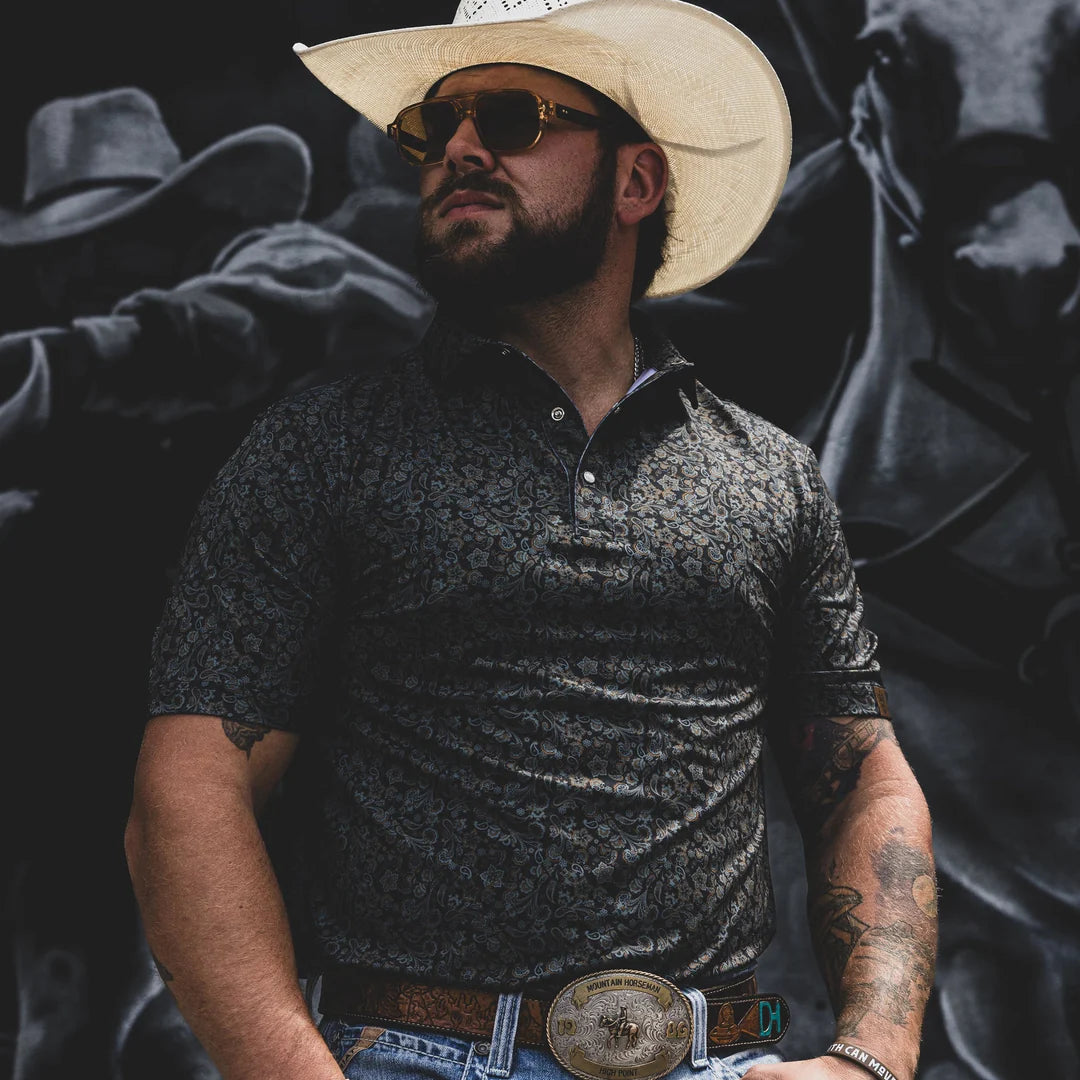
Tough and timeless, this polo is built for the long ride. Featuring a crisp, non-collapsing collar and a rugged, stretchy fabric, it's the perfect shirt for any cowboy's wardrobe.
And he’s had a lot of stuff going on recently — the sort of stuff that involves not just big mountains but big screens. His latest climbing credits on film include the Sundance award-winning documentary Meru, chronicling his efforts to summit the notorious Himalayan peak Mount Meru (via the Shark’s Fin route), and the newly released IMAX 3D documentary National Parks Adventure, which coincides with the National Park Service’s 100th anniversary.
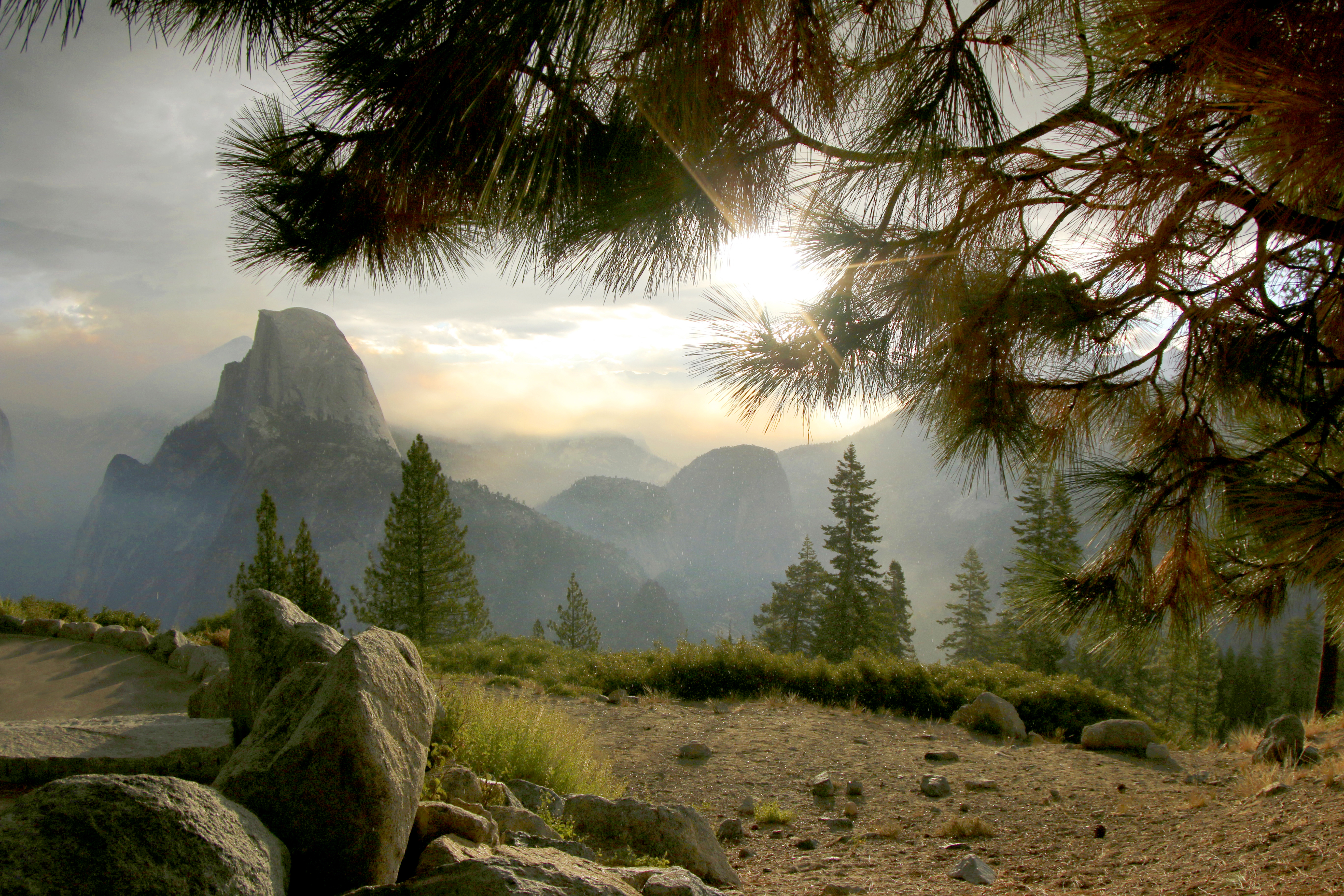
“I’m a complete advocate of the National Park Service,” Anker says. “My family is from the vicinity of Yosemite National Park, going back five generations, and I was introduced to many of those great parks by my parents. The opportunity to be part of this film is a huge honor.”
Growing up in California’s Sierra country, Anker earned early climbing stripes on Yosemite’s signature 3,569-foot granite wall, El Capitán, and throughout several parks of the West. Now based in Bozeman with wife Jennifer Lowe-Anker and his three sons, Anker is currently a captain of The North Face Global Athlete Team, serves on several climbing and outdoor leadership boards, and works with the Alex Lowe Charitable Foundation, which supports the Khumbu Climbing Center in Phortse, Nepal.
C&I caught up with Anker a couple of days after his return from his latest Himalayan climbing expedition to talk about favorite high places, national parks in 3-D, and what makes this mountaineer’s knees wobble.
Cowboys & Indians: You just returned from familiar stomping grounds and a “second home” of sorts, the Himalayas. Brief us on your latest expedition.
Conrad Anker: I was in the Khumbu region of Nepal with my good friend [Austrian elite climber] David Lama. We were trying to climb a peak there called Lunag Ri, a lesser-known 6,900-meter mountain which hadn’t yet been summited — and still hasn’t. It’s a very challenging, classic alpine climb. We got farther than other teams have, about 300 meters from the summit, but ultimately we didn’t have success.
C&I: Is the climb still a qualified success if you know you made the right decision by turning around?
Anker: Absolutely. Mountains are always going to be stronger than we are, whether you reach the summit or not. If you’re making grounded decisions and you come back alive with 10 fingers and toes and a nose, that alone is a success. We would’ve had to spend the night in the open at 23,000 feet in the middle of November in minus 25 degrees Celsius temperatures and howling wind. So we knew it just wasn’t going to happen this time.
C&I: Next time?
Anker: Yeah, I’d like to revisit and have another go at it. It’s always fun to reach the summit of a peak that hasn’t been climbed yet. The real key, though, is going into it with the right attitude and a sense of exploration — and also valuing the partnership and friendship you build with people along the way.
C&I: Your partnership with fellow die-hard climbing elites Jimmy Chin and Renan Ozturk seems to be the focus in the recent documentary Meru — at least as much as the infamous Himalayan peak itself.
Anker: I’d say it’s the most important part of it. Whether you make it all the way or not, having that chance to be with your friends in a very unique and demanding place like that is the greatest blessing of all.
C&I: In the film, which traces your repeat attempts to climb one of the most unclimbable-looking rocks out there, at Himalayan altitudes, Jon Krakauer calls Meru “the test of the master climber” and you refer to it as “the culmination of all I’ve done.” Where do you go from there?
Anker: Well [laughs] ... down, I suppose. I still want to do fun and challenging climbs, but at this point in my career, I don’t need to be upping the ante any more than that. Meru was it. I’d say that was the one that really pulled everything together for me.
C&I: You’re now on the giant screen with stepson Max [Lowe, adventure photographer] and fellow adventurist Rachel Pohl in the new MacGillivray Freeman IMAX 3D release National Parks Adventure. More than 30 U.S. national parks were scouted for this movie. How many did you personally visit over the course of the production?
Anker: The film covers a whole bunch of parks, including crown jewels like Yellowstone, Yosemite, Glacier, and Everglades. I visit Devils Tower National Monument in Wyoming; Arches, Canyonlands, Zion, and some [Bureau of Land Management] land around Moab in Utah; and then Pictured Rocks National Lakeshore in [the] Upper [Peninsula of] Michigan.
C&I: Pictured Rocks may be the one park on that list that isn’t already familiar to many of us. How did that location come about?
Anker: Quite unexpectedly. We’d initially planned to shoot some ice-climbing sequences close to my home at Hyalite Canyon [in Montana’s Gallatin Range, near Yellowstone]. But because of the dry winter and light snowfall out here last year, we scouted and moved it to Pictured Rocks at the last minute.
I love Hyalite, which is about 40 minutes from here in Bozeman. In fact, I’ll be heading there this afternoon to do some ice climbing. But Pictured Rocks, where we ended up doing the ice climb, turned out to be this incredible find with these gorgeous ice caves and frozen waterfalls. The West has so many iconic national parks, but this was a really the big surprise. Plus it’s nice to shine a spotlight on the beauty of the Midwest as well. It’s fantastic there in the summer, too.
C&I: It’s one thing to make a leisurely visit to a beautiful, remote national park and quite another to do it on an IMAX shooting schedule. What were some of the biggest challenges making this movie?
Anker: The camera itself. I mean, it’s the size of a dishwasher and maybe about as heavy as one. Getting it in location was always a tremendous amount of work. At Devils Tower, we had to get the camera into position on the top of that giant cliff. We spent a couple of days all working together on just that — which was as much fun as anything else.
Then, of course, we had to time everything precisely to the right light. And you’re not exactly in a studio or some controlled setting where you can just expect things like that to be straightforward. They almost never are out there. It’s a complete unknown every time.