
Akiak, Alaska — February: It is pitch-black in the Alaska village where I am teaching. The generator has broken down and the village has no heat and no lights. I am in my sleeping bag wearing my coat, a little worried about hypothermia. The forecast calls for a low of around minus 30.
I am drifting in and out when I hear the barking. Wolves are coming in for the dogs. Light usually keeps the wolf pack from entering the village, but the easy meal the dogs make is too hard to resist now that we are in the dark. Suddenly a shotgun blast erupts, followed by another. Yupik Eskimos aren’t about to lose part of their dog teams to wolves.
check out our premium collection
Around 6 a.m., I trudge through the snow for school to get ready to teach my class. The air is crisp to the point of being painful. I am watching the moonlight illuminate my breath when I hear a chopping sound. I make out an elderly woman to my left wearing everything she could find to stay warm as she chops firewood.
The Midnight Troubadour
Tough and timeless, this polo is built for the long ride. Featuring a crisp, non-collapsing collar and a rugged, stretchy fabric, it's the perfect shirt for any cowboy's wardrobe.
A few days later, I am showing my replacement around the village when he says he sees a caribou skin stretched over the side of a cabin. It looks odd to me until we get closer. It’s a wolf pelt. There is a Native woman in the doorway braving the cold for a smoke. She says a hunter brought it in off the tundra a few days ago. A woman in her 60s took it into her cabin, thawed it out, skinned it, and then tacked it up to dry.
As we walk away, my replacement asks if I ever plan to come back to Alaska. I always come back, I say. It is as close as I can ever get to how the Old West was.
Poet Robert Service, the so-called bard of the Yukon, once described those who went to Alaska as a “race of men who don’t fit in.” They were men and women who only felt comfortable living on the fringe of society, moving farther and farther away until they fell off the edge of the map.
It seems like an apt description for some of the men who went west in the early days. I often wonder if the description applies to me as well. I am confident it applied to Service. In 1904, he was northbound for Yukon Territory, headed toward the Whitehorse branch of the bank he worked for when he got off at Juneau for a few days. He wandered into a watering hole called the Missouri, today’s downtown Imperial Saloon, lingering long enough to witness a gunfight. It became the basis for his poem “The Shooting of Dan McGrew.”
Frontier historians claim Alaska drew in legendary Old West figures as sort of a last hurrah for them. There are plenty of stories to back up the assertion.
Capt. Jack Crawford, the Poet Scout of the West — who rode with Col. William F. “Buffalo Bill” Cody and James Butler “Wild Bill” Hickok — went to the Klondike Gold Rush sporting a white goatee, long hair, and a buckskin shirt and ended up selling everything from ice cream to hay out of his store in Dawson called The Wigwam. The Klondike reminded him so much of the Old West he wrote his old friend Buffalo Bill about coming north to participate in all the fun.
A young Army lieutenant named Charles Erskine Scott Wood guided the Charles Taylor Expedition in 1877 to Mount St. Elias, a monster of a peak at 18,008 feet. Taylor failed, but Wood became the first American to encounter the creamy white Kermode “ghost bear,” play medicine man for the Huna Tlingits, and discover Glacier Bay. Two years later, he was in Montana standing next to Gen. O.O. Howard recording Chief Joseph’s immortal words, “From where the Sun now stands, I will fight no more forever.”
Luther “Yellowstone” Kelly, the chief of the U.S. Army Scouts Yellowstone Division, who guided U.S. forces against the Sioux after the Battle of the Little Bighorn, took a stab at Alaska twice. Kelly’s most famous trip north came as a guide for the 1899 E.H. Harriman Alaska Expedition, a two-month maritime exploration of Alaska’s coast from Seattle to Siberia and back financed by wealthy railroad magnate Edward H. Harriman. It’s not clear why Harriman, who is a story unto himself, chose to journey to Alaska when he was supposed to be taking a long, restful vacation at his doctor’s behest. The speculations were many: Did he intend to develop Alaska’s resources? Build a railroad bridge from Alaska to Russia or across the territory? Buy the whole shooting match? Whatever the deeper motive, Harriman’s idea of R&R included hunting Kodiak bears — but with a full contingency of scientists, artists, and photographers to explore and document the wild frontier from a retrofitted ship.
One-time cowboy, bank robber, cattle rustler, and outlaw turned lawman Frank Canton, who aided in the killing of the notorious Doolin gang of Oklahoma and fought in Wyoming’s Johnson County Range War, begged to be appointed a deputy U.S. marshal for this new land. After following the gold rush to Alaska, he received the appointment in 1897, maintaining the law out of an office in Circle City. In 1898, he rescued the riverboat Walrus from a gang of cutthroats on the Yukon River.
Texas lawman George Lewis “Tex” Rickard went bust in the Yukon before participating in the Nome Gold Rush. In Nome he opened the Northern Saloon in direct competition with Wyatt Earp’s Dexter Saloon. The two staged boxing matches through the hard winter months. Rickard eventually returned to the lower 48, and the one-time cowboy would go on to construct the third Madison Square Garden in New York City, become the founder of the New York Rangers hockey team, and make millions as a fight promoter.
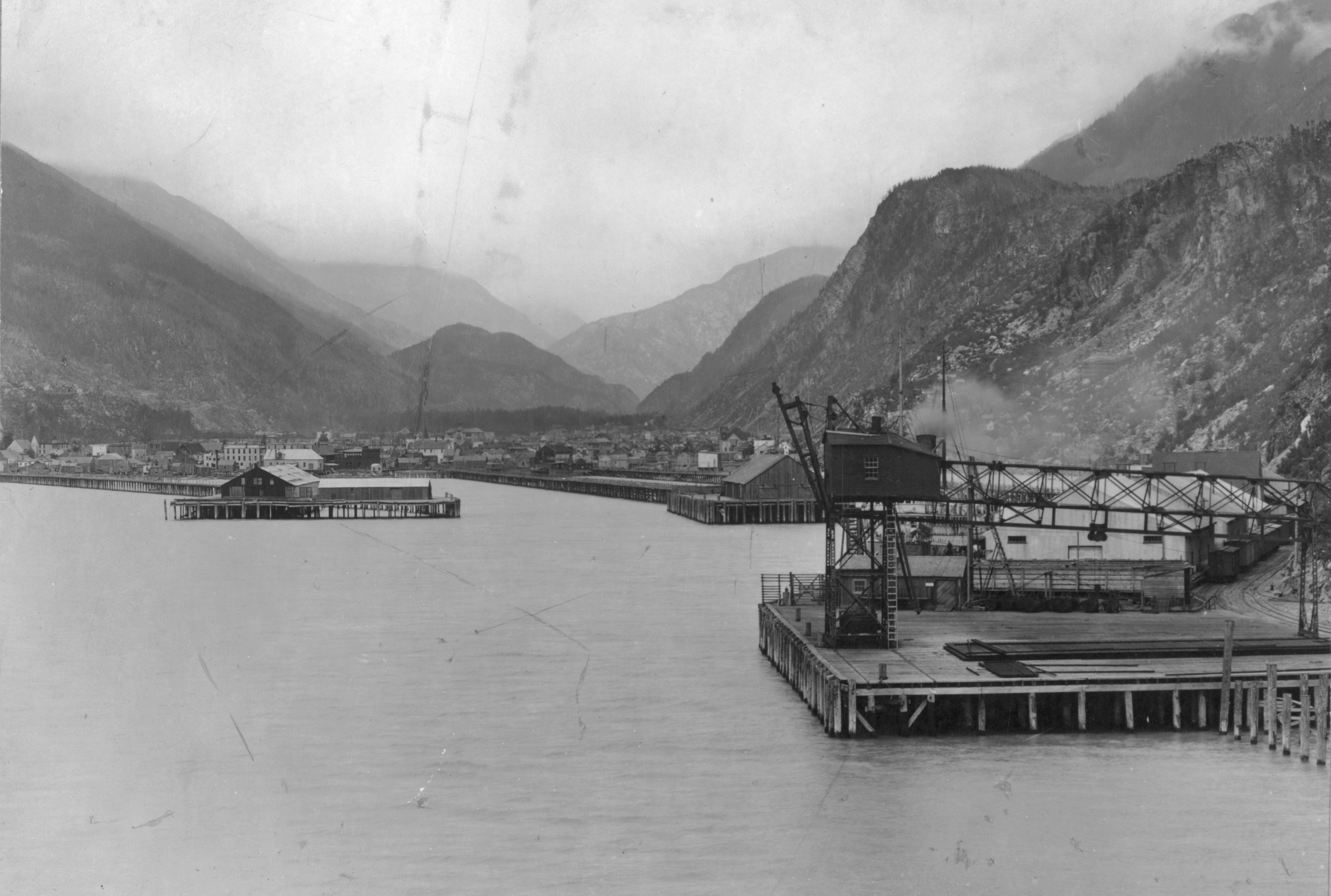
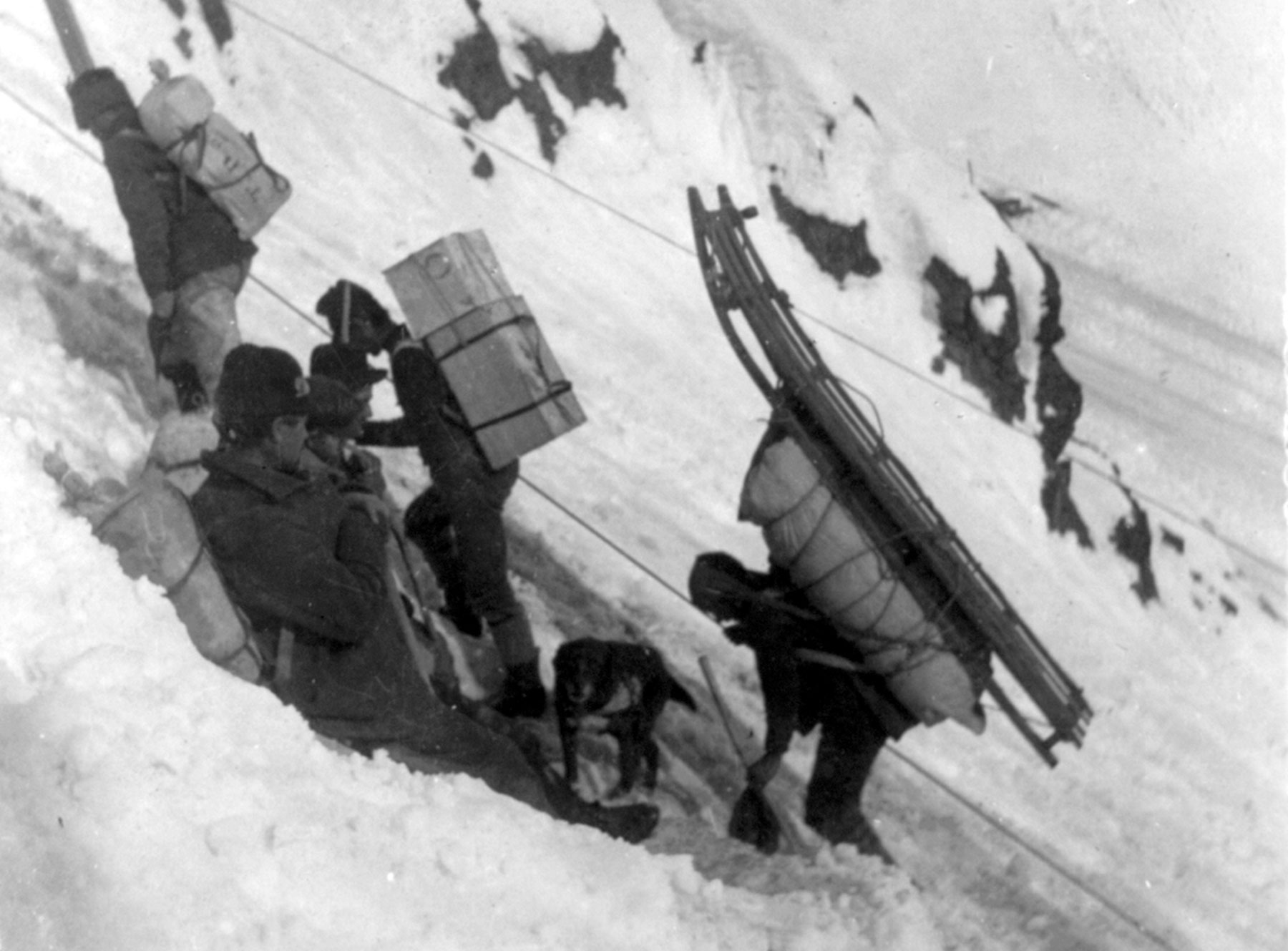
A very green Jack London landed in Skagway in 1897. He dreamed of being a writer, but thus far he’d been everything but — he’d worked in a jute mill, a laundry, and a cannery; been a sealer and a hobo. Desperate to change his fortune, he headed for the gold fields. But instead of finding gold, he found muddy streets lined with tents, huts, and ramshackle structures. Laughter, screams, and gunfire filled the air. Prostitutes conducted business in full public view. Supt. Samuel Steel of the North West Mounted Police called Skagway “little better than a hell on earth.” The White Pass greeted young Jack with a horrifying scene. Dead and dying horses littered the slopes. One count estimated the death toll at 3,000. “The horses died like mosquitoes in the first frost and from Skagway to Bennett they rotted in heaps,” London wrote of the justly named Dead Horse Trail. London made it over the White Pass, gathering enough adventures to write The Call of the Wild, White Fang, and “To Build a Fire.”
Augustus Mack cofounded Mack Trucks with his Klondike gold fortune. Sid Grauman opened his Chinese theater in Los Angeles with Klondike gold. Playwright and admitted con man Wilson Mizner, who later opened the famed Brown Derby restaurant in Los Angeles, spent time in Alaska scamming miners out of Nome gold.
President Donald Trump’s grandfather, Friedrich Drumpf, went to the Klondike in 1897 to mine the miners. He had come to America in 1885 at age 16 and worked as a barber in New York City. In Alaska, he partnered with Ernest Levin to set up a tent along the trail and serve soups and fresh horse steaks harvested from the numerous dead mounts along the way. He eventually set up a restaurant-bar in Whitehorse with an attached bordello that catered to the wants of would-be prospectors. Drumpf left the Yukon in 1900 for Germany to marry and then returned to New York City, where he got into real estate using funds earned during the gold rush.
Many of the Old West holdouts came from Arizona. John Clum, who had been the editor of The Tombstone Epitaph during the famous shootout between the Earps and the Clantons and forcibly disarmed Geronimo in 1877, went to Alaska as a postal inspector. He traveled a record 8,000 miles through unmapped wilderness in order to set up 12 post offices. Fellow Arizonan Ed Schiefflin, who found the silver strike that gave birth to Tombstone, sailed up the Yukon River searching for gold. Wild West showman and rodeo champion Charlie Meadows arrived from Arizona with a portable saloon, which he hauled over the near-vertical Chilkoot Pass in order to open the Palace Grand in Dawson. There, he impressed patrons by shooting tiny glass balls out of the hands of dance hall girls with his six-shooters until the inevitable accident occurred, forcing him to provide different entertainment.
Famed dance hall girl and singer Honora Ornstein, aka “Diamond Lil”
Source: https://www.cowboysindians.com/2017/09/wild-west-alaska/