
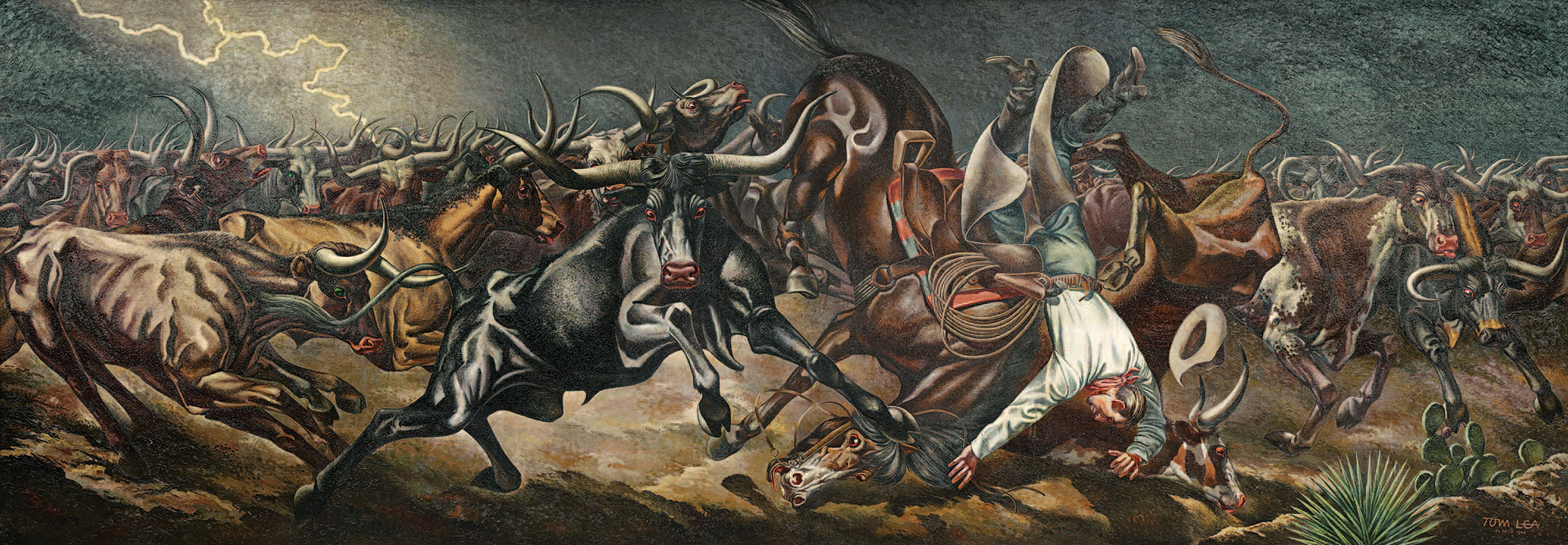
The Chisholm Trail, which reaches its 150th anniversary this year, is the most famous cow path in world history. Between 1867 and 1884, an estimated 5 million head of cattle, and a million mustangs, were driven up the trail from Texas to railheads in Kansas. It was the largest migration of livestock ever recorded, and it produced a new figure in American history: the tough, proud, footloose Texas cowboy. Long after its demise, the Chisholm Trail was celebrated in at least 27 Hollywood films; the best is still probably Red River (1948) with John Wayne and Montgomery Clift.
Less well-known is the man for whom the trail was named. Jesse Chisholm was not an early Texas cattleman, as people often assume. Nor did he drive a single head of beef up his namesake trail. Half-Cherokee and half-Scottish, Chisholm was a trader, explorer, scout, and diplomat who brokered many important peace negotiations between whites and Indians in Texas and Oklahoma. His biographer, Stan Hoig, sums him up as an “ambassador of the Plains.”
check out our premium collection
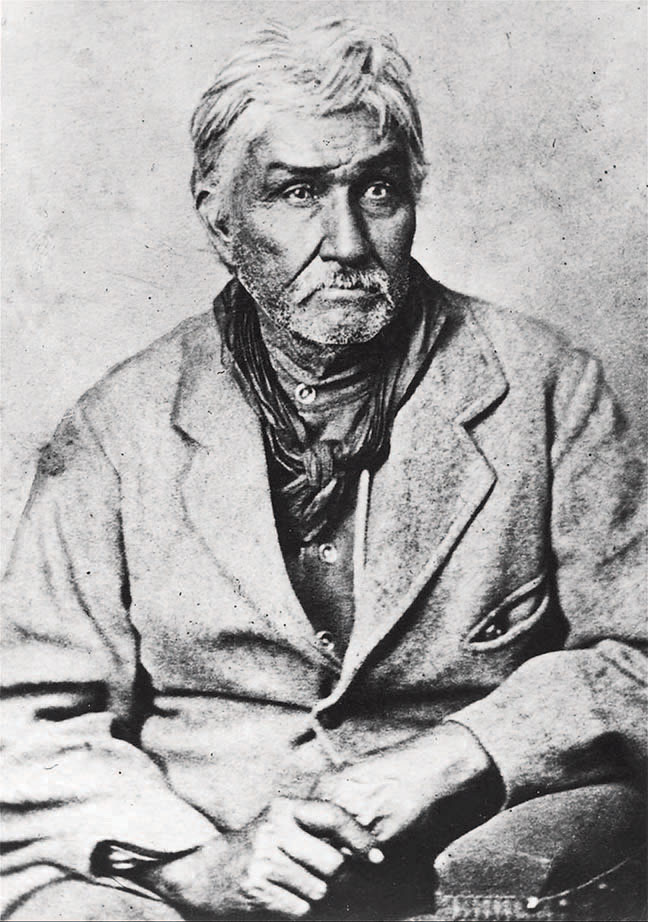
Unfortunately, Chisholm left behind no journal, diary, or personal documents that we know about. A trunk full of his papers is said to have burned up in a house fire. Only one unrepresentative photograph of him exists, taken late in his career when he was in poor health. Chisholm remains a mysterious, elusive figure, with an almost uncanny ability to be present at key events in frontier history.
The Midnight Troubadour
Tough and timeless, this polo is built for the long ride. Featuring a crisp, non-collapsing collar and a rugged, stretchy fabric, it's the perfect shirt for any cowboy's wardrobe.
Chisholm was a brilliant linguist who spoke 14 tribal dialects, in addition to English and Spanish. This, and his sterling reputation for honesty, wisdom, and integrity, made him invaluable at treaty negotiations and peace councils. To survive for as long as he did, so far from civilization, he must have been an expert at reading sign, finding game and water, dealing with dangerous weather, and avoiding ambushes. And like Joseph Walker, the mountain man turned trader who never lost a man under his command, Chisholm understood that diplomacy, not firepower, was the real key to survival on the frontier.
He was probably the only man with white blood who could ride into a camp full of angry, vengeful Comanches painted for war and ride out again with his scalp attached and a string of ponies into the bargain. Ten Bears, the principal chief of the Yamparika Comanches, was a close personal friend. Chisholm was also on friendly terms with Buffalo Hump, who led a thousand rampaging Comanches on the great raid of 1840, with Satanta, the last great Kiowa war chief, and Sam Houston, the founder of Texas. Circumstances often made it difficult, but throughout his career, Chisholm tried to be a faithful friend to both the white man and the Indian and refused to pick sides.
He was born in Tennessee, in 1805 or 1806, to a Scottish father and his Cherokee wife. At the age of 5 or 6, with the Scotsman gone, Jesse’s mother took him away to live with the Western Cherokees on the Arkansas River in present-day Arkansas. He lived a Cherokee boyhood of hunting, trapping, woodcraft, dances, and clan rituals, at a time of ever-present danger. The Western Cherokees were engaged in ferocious tribal warfare with the Osages. At 20, Chisholm was living in the polyglot, multiethnic community at Fort Gibson, Oklahoma, a remote outpost. Like so many young men who grew up on the frontier, he yearned for adventure in the great unknown spaces farther west.
In 1826, he joined a gold-hunting expedition, following the Arkansas River all the way up into Kansas. Returning empty-handed to Fort Gibson, he started buying corn from Cherokee farmers and selling it to the military. Soon he was bartering coffee, sugar, cooking pots, cloth, guns, knives, and other manufactured goods with several tribes in Oklahoma, and bringing back furs, moccasins, horses, and mules. It was profitable, interesting work but risky. War parties roamed the landscape like pirates on the ocean.
His first big adventure came in the summer of 1834, when he rode as a scout for the Dodge-Leavenworth Expedition. This was the first attempt by the U.S. government to make friendly contact with the Southern Plains tribes. The 500-strong party included the First Regiment of U.S. Dragoons; 30 Cherokee, Osage, Delaware, and Seneca scouts; Jefferson Davis, the future president of the Confederacy; and the traveling artist George Catlin, who recorded the expedition in sketches, paintings, and journal entries.
The boundary between the eastern farming tribes and the western horse nomads was a densely wooded strip of low trees and brush known as the Cross Timbers, running down through Oklahoma into northeast and central Texas. After working through it for three days, the expedition broke through onto a vast prairie with enormous herds of buffalo, wild horses in abundance, and occasional glimpses of mounted Indians in the far distance. Already the Dragoons were wracked with fever and disease, probably cholera.
They soon encountered Comanches, who were friendly and hospitable and invited the soldiers to camp near a large village. Hundreds of tepees were surrounded by some 3,000 grazing horses and mules. The Dragoons established a sick camp nearby and another outside a Wichita village of grass huts. Gift-giving and parley sessions began.
In diplomatic terms, the expedition was a success. With Jesse Chisholm translating via the Caddo language, peaceful relations were established with the Comanches, Wichitas, and Kiowas. No one at the time could have known how fragile this peace would prove. In terms of human suffering, the expedition was nightmarish. A third of the men died of disease or thirst as they toiled across the parched plains in the furnace of summer. Gen. Henry Leavenworth perished along the way. Col. Henry Dodge, who barely survived, thought that no campaign in America had ever “operated more severely on men and horses.” For Jesse Chisholm, it was an initiation, and a turning point. His future lay out there on the plains.
In 1836, having turned 30, Chisholm married 15-year-old Eliza Edwards, the half-Creek daughter of a trader named James Edwards. He based himself at Edwards’ remote trading post on the Canadian River in Oklahoma, a place that Hoig describes as “a port on the coast of an unexplored prairie-ocean that challenged the courage of those who dared venture onto it.”
Chisholm loaded up his wagons with trade goods and headed out onto those prairies, looking for Indians willing to barter for horses, mules, buffalo robes, and other furs. He was courageous and commanded respect, but his real skill was avoiding and defusing confrontation with militant scalp-hunting warriors. He became the first outsider to gain permanent access to the Comanche and Kiowa lodges, and this enabled him to free many white and Mexican captives over the years.
As a husband, however, he was a dismal failure. Eliza said that Jesse would visit her once a year, stay for a week or two, and then disappear again for another year. Chisholm was one of those restless frontiersmen who preferred the privations of the trail to the confinements of home. In 1839, he took up with a party of frontiersmen and Delawares and blazed a new trail to California through West Texas. A few years later, he rode down into Mexico to hunt for the missing Cherokee intellectual Sequoyah. One senses that any excuse for an adventure would do.
In 1843, Sam Houston, now the r
Source: https://www.cowboysindians.com/2017/03/blazing-the-old-chisholm-trail/