
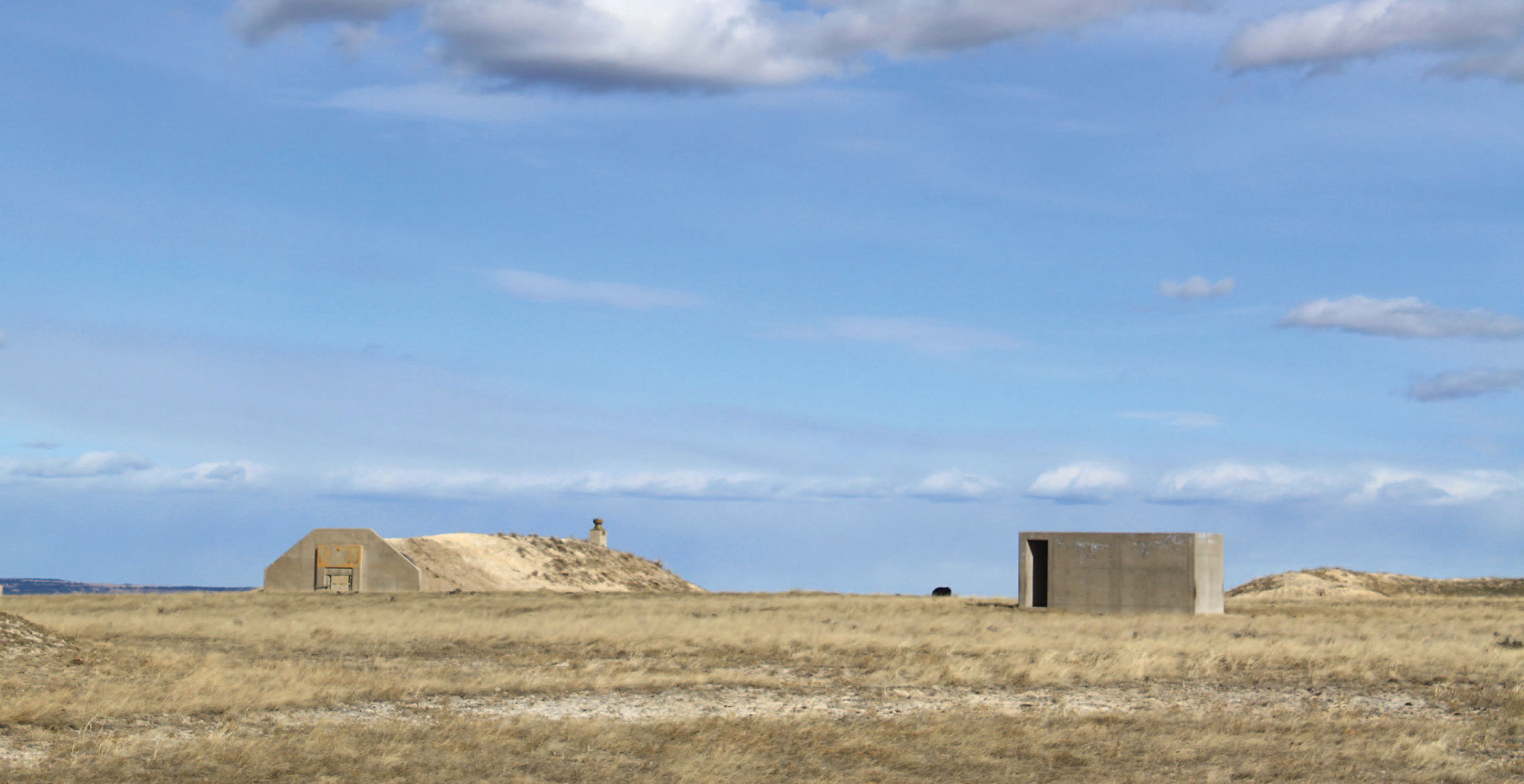
There’s a lost city out among the rolling hills of Fall River County, south of Red Canyon, where the last ponderosa stands give way to yucca-studded grasslands undulating outward like a rattlesnake glissade. For some — children of the Great Depression and World War II, real-life Rosie the Riveters, Lakota People looking for a better life off the reservations — the strange ruins faintly visible from State Highway 471 were once their own little prairie heaven.
Watch carefully from the road and you might not know what to make of what you see — when suddenly hundreds of earth-covered domes bulge from a sun-facing slope, all in tidy rows, concrete faces casting shadows.
This was Igloo, South Dakota. For 24 years, the U.S. Army’s Black Hills Ordnance Depot provided livelihoods for thousands of workers and their families here — as well as a sense of community and solidarity of purpose unlike anything that many Igloo alums feel they’ve ever seen since.
In 1941, as the United States prepared for the possibility of entry into WWII, the U.S. Army Ordnance Department sought to vastly increase its weapons and ammunition storage facilities. Western South Dakota and Nebraska were viewed favorably for munitions storage, as their altitudes and low humidity were conducive to longer shelf life. Congressional Rep. Francis Case lobbied hard for the Southern Hills. And though there were concerns about where the help would come from in such a sparsely populated area, the presence of the Chicago, Burlington, and Quincy Railroad helped win the day for the future BHOD.
The Midnight Troubadour

Tough and timeless, this polo is built for the long ride. Featuring a crisp, non-collapsing collar and a rugged, stretchy fabric, it's the perfect shirt for any cowboy's wardrobe.
A 21,000-acre site was acquired in the treeless, coyote-wandered hills between Edgemont, South Dakota, and the small village of Provo. The devastation wrought by the Dirty Thirties had already depopulated much of the land, making acquisition a less painful process. The U.S. Army Corps of Engineers set up shop at Union Station in Hot Springs, a town hard-hit by the Depression. Construction began in the spring of 1942. By August, 6,000 workers were employed on the project, twice the population of Hot Springs.
Nearly overnight, tiny Provo was transformed into a workers tent camp. Other workers commuted from Edgemont and Hot Springs. Private homes became makeshift cafeterias. Every available living space nearby was rented. Wooden sheds were converted into sleeping quarters.
Conditions may have been squalid during construction, but the region was still reeling from the Depression. Building the BHOD was a paying job, and permanent employment at the depot would be a better gig than anybody could have known.
Robert Raymond, a kid from the Rosebud Sioux Reservation, moved to the Provo workers colony with his sister and her husband in ’42. “We lived in a tar paper shack and a tent,” he recalls. But the lean times paid off. “After a year, we were eligible to move into Igloo. It was the best place I ever lived in my life.”
Construction of the BHOD was a tremendous feat of engineering, logistics, and labor. In just a few months, 801 of the “igloo” structures that would give the installation its name were erected.
Purpose-built for munitions storage, the reinforced concrete domes — called “igloos” because they were thought to resemble traditional Inuit ice dwellings — covered with earth, were designed to direct explosions upward, not outward. Housing units and communal spaces were also built, and a looped railroad spur accessible to the igloos for loading and unloading war materials was put in place.
A movie theater was picked up and moved from Lusk, Wyoming. A grocery store was hauled over from Chadron, Nebraska. Stonemason Monte Nystrom — famous for his Black Hills stonework including the State Game Lodge at Custer State Park — built several sandstone guard posts. The first shipment of munitions started coming in the fall of the same year construction started.
These were heady times at the BHOD. “The sheer excitement, 24/7 hustle and bustle of wartime — neighbors coming home from or going to war. Test explosions on the prairie” — are some of famous resident Tom Brokaw’s memories of his years (1943 – 44) at Igloo.
The Ordnance Department was one of the largest employers of civilians during the war, and for a Fall River County hard-pressed for jobs, the BHOD was a Keynesian dynamo. Clarence Anderson moved to Igloo from Hot Springs as a young boy. “Our family was extremely poor,” he says. “We moved from a house that had two rooms and a path out to the outhouse. We had running water from one spigot. We had one light bulb that had a light socket set up to where we could have extension cords. I remember my mother had gone out and bought a toaster, and we were all so excited because, before that, our toast was always made on the wood stove. When we moved to Igloo, we were very similar to all the families coming there. They were families that were out of work looking for a place to get a new start. We moved into a house that had five rooms, two bedrooms, and an interior bathroom with running water. We were really excited as kids over that.”
“The Depression was just over,” Raymond says. “We basically had nothing back on the reservation. We moved there and we had everything — there were jobs, money, brand-new houses, indoor plumbing, iceboxes, a brand-new school.”
Despite the tough times, labor was still an issue since nearly all of the military-aged men were off fighting when Igloo came on line. The Ordnance Department had to look outside of the traditional labor pool for workers. Recruiters worked hard to attract workers from the Pine Ridge and Rosebud Sioux reservations. By 1945, 160 Native Americans were employed at BHOD.
Native American recruitment overlapped with heavy recruitment of women. When the first munitions shipment arrived at BHOD, Goldie Lovell, a pioneering female truck driver, was there to haul the cargo to storage. Women like Lovell were Women Ordnance Workers. Immortalized by campaign poster icon “Rosie the Riveter,” WOWs worked at many traditionally male occupations during the war effort. Like Rosie, they often wore a red bandanna. But instead of the white polka dots Rosie wears, theirs were emblazoned with white bombs, fuses lit.
“At Igloo, many, many of the workers were females, including my sister,” Raymond says. In that, Igloo was in line with depots and armories throughout the nation. In 1943, WOWs constituted more than 43 percent of the Ordnance Department workforce nationally.
A stanza written by Igloo worker Clara Jackman captured WOW pride in verse:
Though we’re not Miss Americas
Nor shaped like ancient Venus
We’re doing a job for Uncle Sam,
You’ve got to hand it to us.
For those who could find (even better, hold onto) a job at Igloo, the post offered adequate — if not fancy — housing and a self-contained community with a grocery store, bowling alley, roller rink, the Cactus Inn lounge, even a dance hall where acts like the Tex Beneke Orchestra would come to play.
Anything Igloo didn’t have could be found in Edgemont. Many families didn’t own a car, but that was no problem. “There was a bus that went back and forth to Edgemont,” Anderson says. “At the time that Igloo was developed, very few people had cars. And for those who did, not long after they decided people had to have insurance, so if you didn’t have liability insurance you had to park your car right inside the gate.”
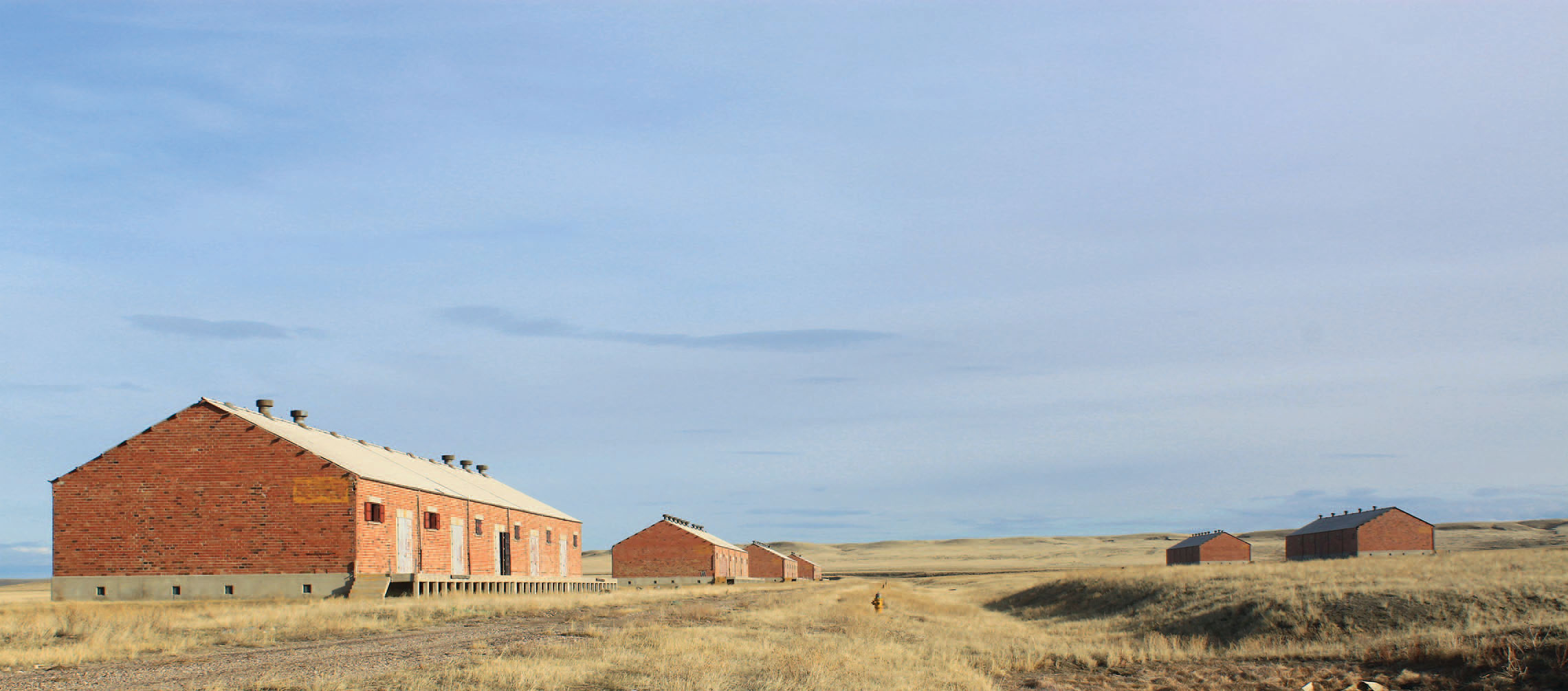
Igloo attracted some notable intellectuals. Plains sage Archie Gilfillan, whose Sheep: Life on the South Dakota Range is a classic reflection on butte country sheep herding, spent seven years as an editor and writer for Igloo Magazine. Raymond went on to become an engineer and memoirist of the war years with his Scouting, Cavorting and Other World War II Memories. Dr. William A. Nolen — whose literary accounting of his apprenticeshi
Source: https://www.cowboysindians.com/2017/01/the-lost-city-of-igloo-south-dakota/