
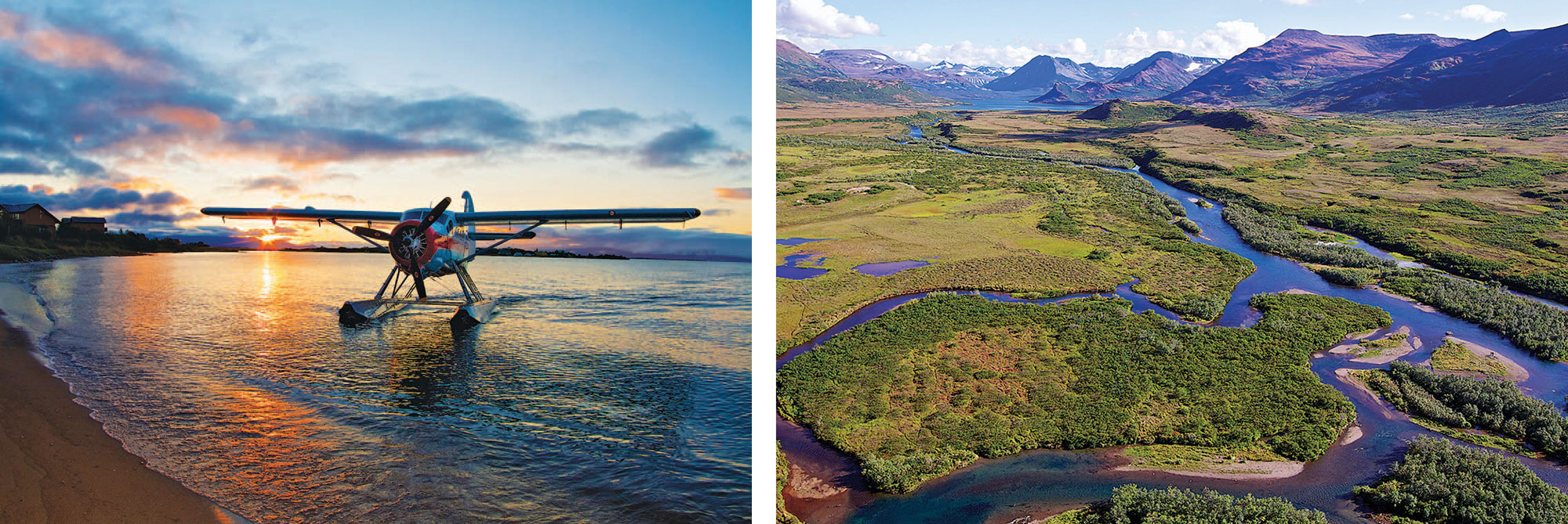
In Alaska, “the West” means something different than it does in other places. Across the state it means “western Alaska,” the most rugged, remote, and unsettled major parcel of land left in the country. It’s the literal embodiment of “frontier,” a word conjured for mostly euphemistic purposes in the rest of the world.
In Anchorage and Juneau (where I grew up) and the Inside Passage, where cruise ships bring floating cities from the Lower 48 every day from spring through fall, Alaska’s whole “last frontier” gambit often comes off like a stale department of tourism pitch. Last frontier? Well, sure, it says so on the license plates ... which you can easily find on all the Hondas and Subarus parked in front of the local Costcos and McDonald’s.
check out our premium collection
Not so in western Alaska, where just getting to the place requires a crazy airborne epic — two hours in a 10-seat de Havilland Otter that takes off from Anchorage and then floats, bobs, dips, and shimmies for 200-plus miles over saber-toothed glaciers, hostile mountain peaks, kamikaze valleys, treacherous hillsides, suicide waterfalls, man-eating rivers, muskegs, meadows, hillocks, sloughs, and, once every 30 miles or so, some lonesome settlement, a loose collection of outbuildings and oil tanks clinging to the vacant tundra like the last leaves of autumn.
The Midnight Troubadour
Tough and timeless, this polo is built for the long ride. Featuring a crisp, non-collapsing collar and a rugged, stretchy fabric, it's the perfect shirt for any cowboy's wardrobe.
West of Anchorage, the most dramatic wonders are found over Lake Clark National Park & Preserve, a wilderness filled with salmon, bears, and the most majestic body of water you’ve probably never heard of. Lake Clark is the milky-green love child of melting glaciers, the central feature of a landscape so forbidding that few modern travelers will ever set foot in it, though ancient tribes have inhabited the area since the end of the last Ice Age.
You have to fly past this place to get to Iliamna.
God, Country, Family — And Fishing
“I’ll tell you what the problem is: It’s the entire country turning away from God and not wanting to face up to the real world around them.”
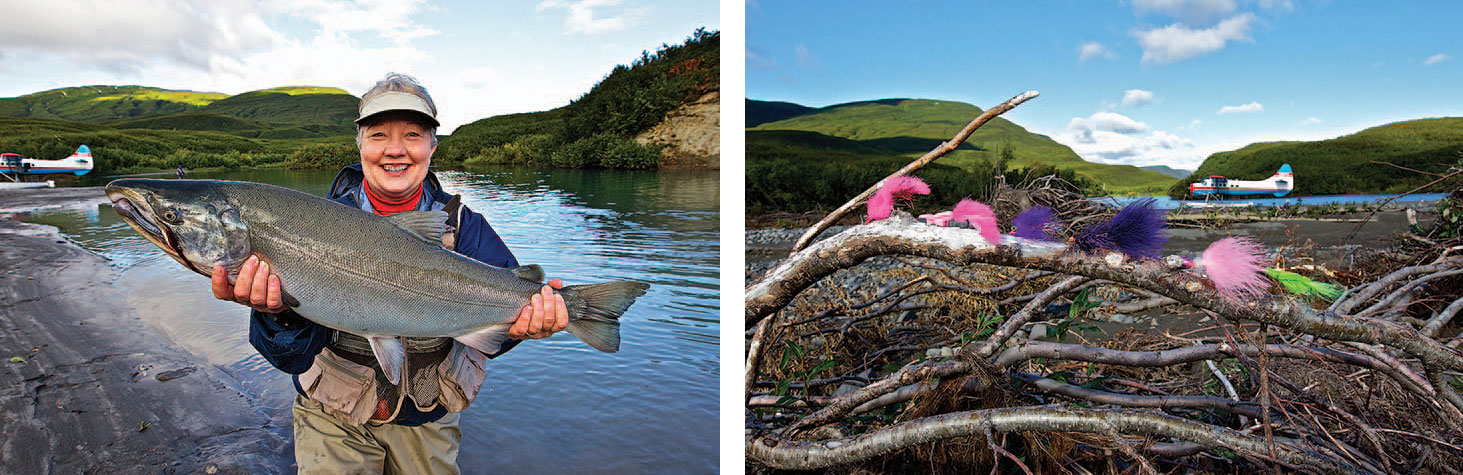
This salty observation comes from a miraculously energetic 85-year-old fisherman named Jim Miller. A lifelong Oklahoman, Jim and his retirement-age son, Carl, have been regular visitors to Iliamna for the last 20 years.
The “problem,” as Jim sees it, is the widespread contemporary abandonment of the hunting, fishing, and outdoor lifestyle that’s been a birthright for men of his generation. Before the sit-and-watch ascension of the NFL, NBA, and that foreign spectacle of guys in knee-high socks running around for 90 minutes not scoring any points, rifles and fishing poles defined sport in this country. As Jim, Carl, and a lot of other men over 50 will warn you, when our collective wilderness zeitgeist and skills vanish, so too will an irretrievable part of our unique national character.
As the kind of guy who gets antsy when strangers start talking about God wanting us all to own personal firearms, you might suspect I’d be quick to dismiss Jim as a rabid reactionary. But I’m not.
For one thing, I agree with a lot of what he says. For another, it’s hard not to like an 85-year-old guy from Oklahoma who has a folksy Will Rogers facility with the English language.
The day I meet Jim, we’re fishing for king salmon in an open skiff on a cold and wet morning on the Nushagak River. He flashes his optimistic flatland wit when assessing a cranky sky that seems almost ready to surrender a temporary clear patch: “Well, boys, it looks like it’s going to stop raining some more.”
Jim and Carl are guests at Rainbow King Lodge in the Native village of Iliamna (population 109). The town rides the banks of Lake Iliamna, one of only two lakes in the world with freshwater harbor seals. These are not to be confused with the Iliamna Lake Monster, or Illie, as locals call the rumored beast that inhabits the lake, ostensible sightings of which have haunted Native tales and prompted a visit from Animal Planet’s River Monsters.
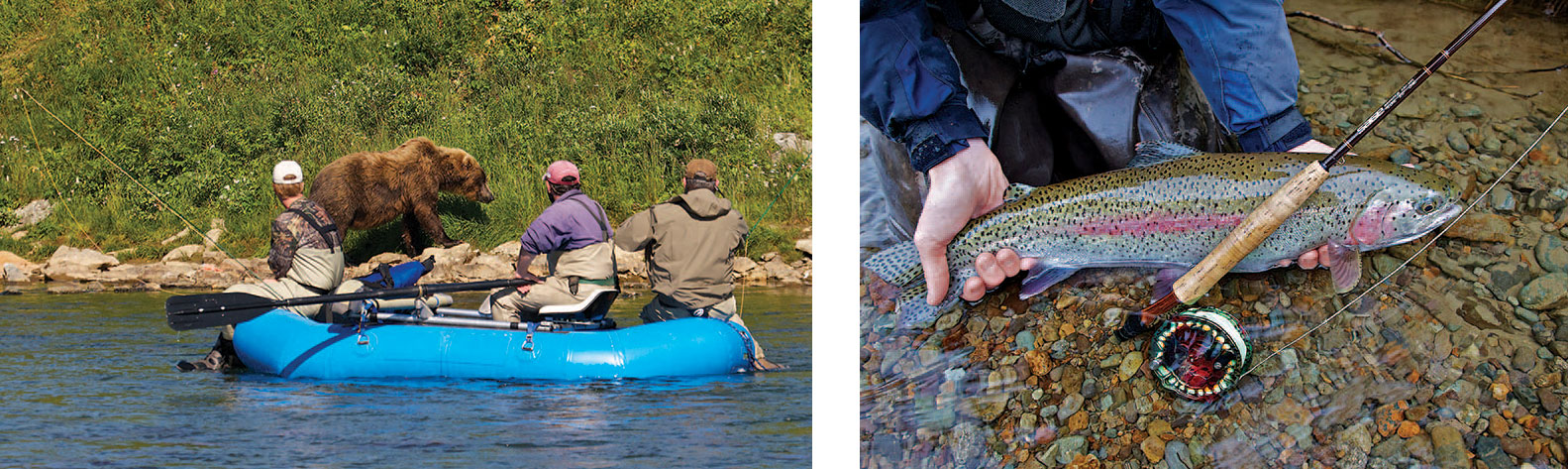
Rainbow King is a fascinating outfit. Comfortable and equipped with everything from ESPN to a world-class chef, it’s nevertheless not as gaudy as the four-star luxury lodges scattered around western Alaska. It’s a “real deal” throwback fly-out lodge from the glory days of Field & Stream. As its name suggests, this place is all about the fish. Though novice fly-casters are welcome and soon brought up to slaying speed by a crew of first-rate guides — “You want to learn a double-fisted whip cast? No problem!” — its top customers are the types who place fishing somewhere very high in the pecking order of God, country, and family.
“It’s a first-class operation. They do everything right,” says Carl when I ask why he and his father keep coming back to Rainbow King. “If it can be done, they’ll do it for you, and if it can’t be done, they’ll have someone working on it,” Jim chips in with his irresistible Sooner drawl.
Like Jim and Carl, more than half of the lodge’s customers are repeat visitors. A lot of that has to do with the staff, but a lot has to do with the fishing, which is stone-cold ridiculous out here. On good days, Iliamna feels like a place out of those sourdough tall tales featuring streams so full of fish that you could walk on their backs from one bank to the other without getting your boots wet. My first day in Iliamna, less than 15 minutes after my first cast into Fog Lake, I pull in two pike and then, in the nearby Copper River, the biggest rainbow trout who’s ever had the honor of having his picture taken with me.
Because it’s one of the more established lodges, Rainbow King has longstanding deals with the local Native corporation that give it exclusive access to some of the area’s best fishing spots. At a secret hole called “the Gorge” my luck isn’t quite as strong as it was on Fog Lake (meaning it takes about 30 minutes before the graylings start jumping into my net), but that’s a small nuisance considering the surroundings. At the head of a placid pond, cloudy jade glacial runoff barrels down a set of steep falls through a rock-walled salmon stream, creating a perpetual geyser of churn, foam, and mist.
“When I die, bury me at Lion’s Head,” says my Rainbow King guide for the day, indicating the gorge’s most prominent rock feature. It’s this kind of aside that makes a guide a good fishing
Source: https://www.cowboysindians.com/2013/05/kings-of-the-wild-frontier/